Redefining Pharmaceutical Research and Training with Digital Twins and AI
Stephen Hilton, Professor, Chemistry and Enabling Technologies, UCL School of Pharmacy
Blanka (née Szulc) Hilton, VR lead for Science Degree apprenticeship, School of Biosciences, University of Kent
This article explores the practical application of digital twin laboratories and AI-powered avatars, focusing on how they bridge the gap between digital platforms and hands-on equipment training. From replicating analytical workflows in virtual reality, to delivering industry-aligned mentorship through multilingual AI avatars to replace in-person training, we look at how these innovations support skills development, increase inclusion, and build sustainability in the pharmaceutical industry. The article also highlights outreach initiatives and apprenticeship models that extend access to underrepresented learners and showcases virtual formats that reduce the environmental impact of travel in building global collaborations.

Pharmaceutical education and training have traditionally focussed on in-person access to specialist equipment and training within physical lab facilities, which often limits opportunities for learners who are based outside of established academic institutions. This traditional barrier is now being removed through the development of high-fidelity digital twin laboratories — immersive, data-driven replicas of physical lab environments that are then accessible via the use of low-cost virtual reality headsets. These virtual labs allow users to practice complex techniques from any location, using realistic simulations of key equipment such as high-performance liquid chromatography (HPLC) systems. Simulated HPLC environments enable learners to configure instruments, prepare solvents, calibrate detectors, and interpret chromatograms with real-time feedback. AI-powered avatars embedded within these environments serve as multilingual educators, guiding users through procedures, explaining principles, correcting errors, and adapting to each individual's pace and confidence level. This model promotes both technical competence and a deeper conceptual understanding. (https:// doi.org/10.1021/acs.jchemed.4c00540 ) (Figure 1).
Flow chemistry training offers another compelling use case. Learners can explore interactive 3D models that replicate the complexity of expensive continuous flow equipment that can reach to US$ 100,000 or more, and allow them to work with it, take it apart and understand its principles and working. Guided by intelligent avatars, students gain insights into the use of the systems, engage in group work on multiple systems, which is not normally possible, and receive real-time quizzes and feedback—an approach particularly valuable for remote learners or those with accessibility challenges. (Figure 1)
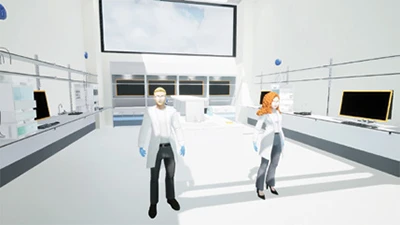
Figure 1: VR HPLC training with intelligent multilingual conversational AI Avatars
These innovations might seem like tomorrow’s training, but HPLC, a cornerstone analytical technique in pharmaceutical research, is now being taught through advanced virtual simulations. These immersive environments allow learners to build and operate HPLC systems from the ground up—configuring instrument settings, preparing solvents, calibrating detectors, troubleshooting common issues, and interpreting chromatographic data. Integrated conversational AI avatars act as multilingual guides, offering step-by-step procedural support, clarifying underlying principles, and adapting instruction based on the learner’s experience, progress, and confidence.
Beyond analytical instrumentation and complex expensive chemistry equipment, similar approaches are being applied to areas such as human anatomy education, where interactive 3D models replicate the complexity of traditional dissection labs. Learners can explore anatomical structures layer by layer, with AI avatars providing real-time explanations, interactive quizzes, and case-based learning. This format enhances clinical relevance and is particularly valuable for distance learners or those with accessibility challenges.
To further bridge theory and practice, contextual simulations—including emergency response scenarios—are also integrated into the virtual training experience. These scenarios promote decision-making under pressure and help learners internalise protocols. Built-in feedback loops and repetition tools support mastery-based progression, allowing individuals to revisit and refine their skills as needed. (https://doi. org/10.1039/D4DD00330F).
Inclusive digital outreach: Lowering barriers to entry
Recognising that talent is widely distributed but access to opportunity often is not, several education initiatives are using digital twin laboratories and AI mentors to reach younger learners globally. By making virtual lab experiences available to schools—particularly those with limited science infrastructure—these programs are helping to demystify pharmaceutical careers and broaden participation in STEM education.
Students from upper primary through secondary levels can engage with AI-supported virtual modules aligned with national science curricula. Subjects such as chromatography, pharmacology, and molecular biology are introduced through interactive, experiment-driven activities. Learners can access these experiences using low-cost VR headsets or standard internet browsers, conducting virtual experiments, solving scientific challenges, and receiving real-time formative feedback to reinforce understanding and build confidence.
Multilingual AI avatars — modelled on real scientists — help break down language and cultural barriers, allowing learners to engage in science without the intimidation factor. Clusters of schools can work together under lead institutions to integrate these tools effectively, supported by the academic staff and outreach team. This model is proving highly scalable, opening science doors to students who may never have considered university pathways before.
The outreach impact extends into communities through science festivals and virtual school visits, where avatars of real scientists can be interacted with in classrooms. These sessions support not only scientific literacy but also serve to inspire students with local and global role models. By partnering with schools to be co-designers in this process, educators can ensure local relevance, building ownership and long-term engagement with the next generation of scientists.
Industry engagement and workforce readiness
A key strength of the digital training ecosystem is its alignment with industry expectations. Working closely with pharmaceutical partners educators using VR can co-develop virtual modules focused on Good Manufacturing Practice (GMP), safety protocols, and laboratory standards. This ensures that learners graduate with not only theoretical knowledge, but also the practical judgement and digital literacy essential for today’s work environments.
Short, immersive modules in areas such as sterile compounding or method validation are also being developed for professionals. Employees can access these modules on demand, reducing the need for physical attendance at training sessions and accelerating upskilling. As the sector embraces remote lab management and digital oversight, our training ecosystem is equipping a workforce ready for transformation.
Further extending this digital-first approach, we have introduced remote carbon-saving poster conferences in our Virtual Environment (VE) platforms. These virtual conferences allow students and researchers to present their work in interactive 3D venues. Attendees join as avatars, browse posters, initiate conversations, and participate in Q&A sessions—mimicking the dynamics of a physical conference while reducing travel emissions and increasing international accessibility.
Such initiatives have gained traction with global partners, allowing our students to exchange findings with researchers in Europe, Asia, and the Americas. The VE infrastructure also supports keynote lectures, roundtables, and real-time panel discussions, broadening the academic experience and encouraging international collaboration without incurring the financial and environmental cost of travel.
Sustainable collaboration with industry: Apprenticeship model and remote collaboration
In addition to efforts focused on digital outreach and undergraduate training, some institutions are advancing long-term, industry-integrated education through professional apprenticeship models. These programs are designed for individuals already employed in the pharmaceutical sector who are earning academic qualifications whilst continuing in full-time work.
These work-based learning models use digital twin environments to provide practical laboratory training without requiring participants to leave their workplaces. The virtual training closely mirrors the tools, equipment, and workflows found in industry settings, ensuring immediate relevance and application. AI-driven avatars enhance the learning experience by guiding users through complex scenarios, identifying critical mistakes, and linking exercises to real-time industrial contexts (Figure 2).
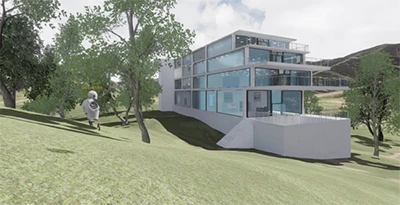
Figure 2: Virtual Reality Centres.
Apprentices in digital training programs benefit from asynchronous access to learning modules, enabling them to balance professional responsibilities with educational advancement. For employers, this model offers minimal disruption and facilitates the immediate application of new skills in real-world settings. There are also significant environmental advantages: reduced travel, decreased reliance on physical lab infrastructure, and a smaller overall carbon footprint.
A key feature of successful apprenticeship frameworks is the co-creation of training content with industry partners. Regular feedback cycles help refine curriculum design, ensuring that learning remains aligned with evolving workplace demands. Apprentices themselves have contributed to innovations in areas such as lab automation and data integrity through virtual collaboration with academic research teams—demonstrating how digital twin environments can drive progress even within regulated industrial contexts.
Through virtual poster presentations, apprentices also share insights from their industry-based work with the broader scientific community. These events not only reduce the logistical and financial burden of traditional conferences but also promote inclusive and sustainable scientific exchange.
Conclusion: A smarter, more inclusive pharmaceutical future
The integration of digital twin laboratories and AI-powered mentors marks more than just a technological evolution—it represents a complete paradigm shift in how pharmaceutical education and research are conducted. By eliminating barriers related to geography, cost, and physical infrastructure, this approach fosters a more equitable, accessible, and future-ready scientific ecosystem.
As digital technologies continue to advance, so too will the possibilities for learners at every level—from school students engaging with science for the first time, to university students refining technical skills, to professionals expanding their expertise in regulated settings. Virtual laboratories, intelligent avatars, and immersive remote conferences are opening doors for broader participation in the advancement of medical and pharmaceutical knowledge.
The vision is clear: a global, low-carbon, digitally connected future for pharmaceutical research and training is not only achievable—it is already becoming a reality. Organisations and institutions that adopt these tools will not only enhance the learning experience but also help lead the next era of innovation in drug discovery, healthcare delivery, and public engagement with science.
References:
1. M. Taylor, N. Bin Abdullah, A. Al-Dargazelli, M. Benito Montaner, F. Kareem, A. Locks, Z. Cao, B. Bowles, S. Schafhauser, J-C. Sarraf, T. Fajinmi, Z. Muwaffak, C. Beckwith, G. N. Parkinson, Z. A. E. Waller, B. R. Szulc and S. T. Hilton, Breaking the Access to Education Barrier: Enhancing HPLC Learning with Virtual Reality Digital Twins, Journal of Chemical Education, 2024, 101, 4093-101.
2. M. V. Taylor, Z. Muwaffak, M. R. Penny, B. R. Szulc, S. Brown, A. Merritt, S. T. Hilton, Optimising Digital Twin Laboratories with Conversational AIs: Enhancing Immersive Training and Simulation through Virtual Reality, Digital Discovery, 2025, 4, 1134-1141, https://doi.org/10.1039/D4DD00330F.
Author Bio

Prof. Stephen Hilton studied Chemistry with Management at King’s College London (BSc 1996) and completed his PhD at King’s College London and Kingston University. He undertook postdoctoral research with Professor William Motherwell FRS at University College London (2002- 2006) and at the Institute of Cancer Research, University of London (2006- 2008). In 2008, he was awarded an RCUK fellowship at the School of Pharmacy, University of London, which later became the UCL School of Pharmacy, where he currently holds the position of Professor of Chemistry and Enabling Technologies.

Dr Blanka (née Szulc) Hilton is a lecturer in Applied Bioscience(Neuroscience and Pharmacology) at University of Kent. Dr Hilton’s pedagogy expertise lies in both synchronous and asynchronous delivery in Higher Education (HE). She received a Senior Fellowship from Advanced HE (SFHEA) in 2023. Currently, she is a Programme lead for MSc in Applied Drug Discovery and Development, where she designs and delivers content to level 7 Research Scientist Degree apprentices-students across the UK. Since 2021 Dr Hilton’s is leading the development of the use of Virtual Reality in science degree apprenticeship programmes, to improve accessibility and lower the barriers in HE