In the rapidly advancing landscape of the pharmaceutical industry, digital maturity symbolizes a new era of progress and efficiency. Transitioning from traditional paper-based methods to sophisticated digital solutions is not merely a trend but an essential step for survival and growth. This editorial examines the importance of digital transformation, the stages of digital maturity and the compelling reasons for organizations to embrace this significant change.
Grasping Digital Maturity
Digital maturity is not achieved overnight; it is a progressive journey through five distinct stages. The journey begins with the initial step of moving from paper or Excel-based systems to fundamental digital solutions. This foundational phase, though basic, is crucial as it sets the stage for more complex digital integration.
As organizations advance to the experimenting and launching phase, they start to test and implement various digital tools, exploring how these tools can enhance their operations. This stage is vital for identifying the most effective solutions tailored to the specific needs of the organization.
The ultimate objective is to attain the final stage, where the organization is entirely digital, fully optimized and capable of accessing real-time data. At this stage, processes are streamlined, data-driven decisions are made swiftly and the organization operates with maximum efficiency.
The Imperative for Digital Solutions
In the pharmaceutical industry, the shift to digital solutions is particularly urgent. The process of bringing a drug to market can take 10-15 years1 and cost over $2 billion2. However, many organizations have not leveraged the capabilities of digital and analytics tools, setting them behind on their digital maturity journey and impacting delivery of therapeutics to market. Inefficiencies in data management and the consequent accumulation of unstructured data, that is not AI ready, has set organizations back in their pursuit of delivering world-class therapeutics patients need today. Additionally, delays caused by logistical challenges only add to these costs.
By leveraging predictive analytics and facilitating bidirectional data movement within pharmaceutical companies and between partners, true transformation can be achieved. This digital shift not only speeds up time-to-market but also improves the accuracy and reliability of data, leading to better decision-making and enhanced outcomes.
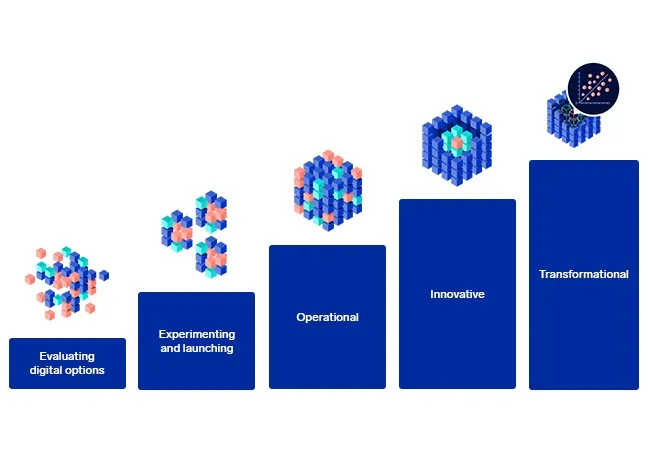
The five stages of digital maturity
Overcoming Challenges
Despite the evident benefits, organizations encounter several obstacles on their digital transformation journey. A major challenge is the presence of data silos, where information is stored in isolated systems, hindering seamless data transfer and collaboration. Additionally, the heavy reliance on manual data transcription results in errors and inefficiencies that can cause product development delays.
To address these challenges, organizations must adopt a unified platform that integrates all data sources. This approach enhances collaboration, reduces errors, and provides real-time insights into processes and product performance. By incorporating AI and machine learning, organizations can further optimize operations and predict outcomes with greater precision.
The Importance of Change Management
Digital transformation is not just a technological shift; it requires a cultural change within the organization. Change management is crucial in this process, ensuring that all stakeholders are aligned with the new digital strategy. Leadership must drive this change from the top down, establishing clear objectives and metrics to measure success.
Organizations that excel in digital transformation are those that adopt a structured and systematic approach to change. By fostering a culture of continuous improvement and innovation, these organizations can unlock the full potential of their digital investments.
Conclusion
The journey to digital maturity is a complex process that requires dedication, collaboration and a clear vision. For the pharmaceutical industry, the stakes are high, but the potential rewards are even greater. By moving off paper, embracing digital solutions and fostering a culture of innovation, organizations can not only survive but thrive in this digital era.
As the industry continues to evolve, those who lead the change in digital transformation will set the benchmark for efficiency, accuracy and excellence. The future is digital, and the time to act is now.
Learn more at the IDBS Digital Maturity Educational Library
References:
1. https://www.boehringer-ingelheim.com/science-innovation/human-health-innovation/drug-discovery-boehringer-ingelheim
2. https://www2.deloitte.com/ch/en/pages/press-releases/articles/deloitte-pharma-study-drop-off-in-returns-on-r-and-d-investments-sharp-decline-in-peak-sales-per-asset.html