Across Asia, healthcare systems are balancing rising disease burden, expanding access expectations, and increasing cost pressures, making generic medicines central to national healthcare strategies [1]. Increasingly, focus is shifting toward development of generic medicines, including liposomal formulations widely used in oncology, anti-infectives, and hospital-based care [2]. With many first-generation liposomal medicines approaching patent expiry, there is growing momentum to develop regional liposomal manufacturing capabilities across China, South Korea, Japan, India, and Southeast Asia [3].
What are liposomal generics?
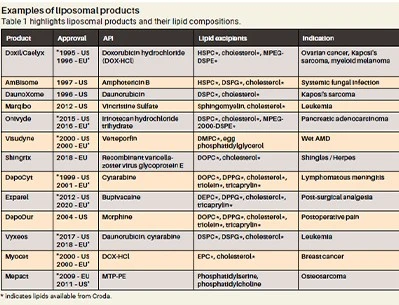
Liposomal generics are complex injectable medicines that use lipid-based delivery systems to improve therapeutic performance, often reducing toxicity and enhancing drug distribution.
Unlike conventional generics, however, liposomal products cannot be replicated by matching the active pharmaceutical ingredient (API) alone. For these medicines, clinical performance is intrinsically linked to the formulation and delivery system—placing excipients, manufacturing processes, and quality controls at the center of the development strategy [3].
Why liposomal drugs are different from conventional generics?
Liposomal medicines were originally developed to overcome specific limitations of traditional formulations, including dose limiting toxicity, poor biodistribution, and narrow therapeutic windows. These benefits arise from engineered lipid bilayers that encapsulate the drug and control how it is released, circulated, and taken up by tissues [3]. Liposomes act as carriers that alter drug behavior in the body. Changes in lipid composition can impact membrane stability, drug retention, and release profile, directly influencing therapeutic performance.
For manufacturers, this creates several well recognised challenges:
Formulation complexity: Liposomes depend on precisely controlled phospholipids, cholesterol, and functional excipients. Small variations in lipid composition or impurity profile can translate into measurable differences in stability or in vivo behavior [3,4].
Manufacturing and scale up sensitivity: Processing steps such as lipid hydration, solvent removal, extrusion, and particle sizing directly determine critical quality attributes (CQAs) like particle size distribution and encapsulation efficiency. Maintaining these CQAs during scale up remains a key hurdle [5].
Regulatory scrutiny: Regulators increasingly apply a “totality of evidence” approach to liposomal generics, requiring comprehensive physicochemical characterisation alongside robust control strategies to demonstrate comparability to the reference product [3].
As a result, liposomal medicines are firmly positioned as complex generics, where excipients and manufacturing processes are just as important as the API in achieving product equivalence [2,3].
Liposomal generics as value added medicines
Liposomal products are rarely simple copies. Many developers now focus on value-added generics, where formulation and manufacturing excellence drive reliability and supply resilience [8].
High quality lipid excipients can support:
• Reduced batch to batch variability
• Improved process robustness during scale up
• Harmonised products suitable for multi region markets
• Greater lifecycle flexibility without compromising quality [4,8]
In this context, excipients function as strategic enablers—not by changing the therapeutic intent, but by ensuring dependable execution at commercial scale.
Lipid excipients: the foundation of liposomal generic performance
In liposomal formulations, lipid excipients are not inert background components. Instead, they are functionally active contributors to product performance. Lipid excipients influence vesicle formation, drug retention, shelf life, and robustness during processing and storage [4].
Both lipid and non lipid excipients play critical roles in determining:
• Stability and leakage behavior
• Sensitivity to temperature, shear, and oxidation
• Batch-to-batch reproducibility of CQAs
Regulators increasingly recognise this functional role, requiring clear justification of excipient selection, impurity control, and change management for complex injectables [6]. For developers, this elevates excipient strategy from a sourcing decision to a core part of the overall CMC package.
What are structured lipids and why are they important in liposomal generics?
In pharmaceutical drug delivery, structured lipids are excipients manufactured with tight control over molecular composition, physical properties, and impurity profiles, tailored for systems such as liposomes [7].
For liposomal generic drug development, structured lipids provide a foundation for control supporting:
• Reproducible liposome formation
• Consistent control of CQAs across development, scale up, and commercialization
• Regulatory ready documentation, including impurities and manufacturing processes
• Compendial compliance, where pharmacopeial standards apply [3,6]
For developers, selecting structured lipids is less about innovation and more about confidence that materials will perform consistently at scale and throughout the product lifecycle. As liposomal patents expire, developers in Asia are seeing a growing demand for high quality lipid raw materials, particularly to support regional manufacturing strategies and global regulatory submissions.
At the same time, it is worth asking: why is Asia becoming important for liposomal manufacturing? The region is emerging as a key hub, driven by expanding pharmaceutical infrastructure, increasing regional demand, and growing investment in advanced drug delivery systems.
How global supply security is critical for GMP-grade lipid manufacturing
A recurring challenge in liposomal generic drug development programs is the transition from laboratory development to commercial scale manufacturing. Key requirements typically include:
• GMP manufacturing aligned with global regulatory expectations
• Reliable, long term availability across the product lifecycle
• Full regulatory support, including DMFs, Certificates of Analysis, traceability, and formal change control processes
• Compendial materials where required [3,6]
From a development standpoint, early alignment on GMP grade lipid supply can significantly reduce late stage risk. Switching excipient suppliers during or after clinical development can trigger additional comparability work, regulatory questions, or delays particularly for complex generics.
Croda Pharma supports these needs through a global GMP lipid manufacturing network, including major sites in South Korea, the UK, and the USA. This footprint enables regional access while supporting globally scalable supply. Combined with strong expertise in lipid quality, manufacturing scale-up, and regulatory documentation, including US DMFs and pharmacopeial compliance where applicable, Croda Pharma helps developers de-risk commercialisation and accelerate access to multi-region markets.
Looking ahead: Lipids as enabling platforms across established and emerging therapies
While liposomal generics represent a mature and immediate opportunity, the same lipid science underpins emerging delivery platforms. Recent research has explored lipid nanoparticle approaches for in vivo CAR T cell engineering, aiming to simplify manufacturing and reduce reliance on viral vectors [9,10].
Although these therapies sit firmly in the innovation space, they reinforce lessons already relevant to liposomal generic developers: lipid composition, manufacturability, and GMP control increasingly define whether advanced medicines can be produced reliably and at scale.
Supporting the liposomal generics journey—and beyond
As liposomal medicines enter the generics phase of their lifecycle, manufacturers in Asia are increasingly well positioned to play a leading role—supported by growing regional capabilities in complex formulation, manufacturing, and regulatory execution. At the same time, the nature of liposomal products means that success depends on more than API access alone, requiring careful control of formulation, excipients, and scalable manufacturing processes.
Progress in this space is underpinned by several key enablers, including robust liposomal formulation and scale up, access to GMP grade lipid excipients, and strong, regulator aligned documentation throughout development and commercialisation. Together, these elements enable manufacturers to navigate the technical and regulatory demands of complex generics while maintaining consistency and reliability at commercial scale.
Through its global GMP-lipid manufacturing network and comprehensive regulatory support, Croda Pharma works alongside manufacturers from early development through commercialisation— supporting commercial-scale manufacturing, accelerating regulatory readiness, reducing development risk, and helping ensure that highquality liposomal generics can be delivered reliably and at scale while also strengthening the scientific, manufacturing, and regulatory foundations required for next-generation lipid-enabled innovation.
Discover our solutions at www.crodapharma.com
For further insights, questions, or continued discussion, Kacee Sims can be reached at kacee.sims@croda.com
References:
1. World Health Organization. Biosimilars: expanding access to essential biologic therapies. WHO News Feature, 2025.
2. Scheckel CJ, Rajkumar SV. Generics and biosimilars: barriers and opportunities. Mayo Clinic Proceedings. 2021;96(12):2947–2957.
3. Liu P, Chen G, Zhang J. A review of liposomes as a drug delivery system: current status of approved products and regulatory environments. Molecules. 2022;27(4):1372.
4. Nakmode D et al. Fundamental aspects of lipid based excipients in lipid based product development. Pharmaceutics. 2022;14(4):831.
5. PharmaSource. Vaccine and complex injectable manufacturing: challenges and regulatory expectations. 2024.
6. Merck Life Science. Regulatory considerations for excipients used in lipid nanoparticles. White Paper, 2024.
7. Mitchell MJ et al. Engineering lipid nanostructures for drug delivery and therapeutic performance. Nature Nanotechnology. 2025.
8. International Generic and Biosimilar Medicines Association (IGBA). Importance of global development of generic and biosimilar medicines for patient access. 2025 Report.
9. Chen Z et al. mRNA laden lipid nanoparticle enabled CAR T cell engineering. Blood. 2024.
10. June CH et al. In vivo CAR T cell therapy. Nature Reviews Drug Discovery. 2025.
Read the full article — it's free
Register with Pharma Focus Asia to unlock expert insights, research articles and in-depth industry analysis.