Excipients play an essential role in pharmaceutical formulations, than they’re often given credit for - so what do they really do beyond serving as inactive ingredients? In reality, they can improve how well a drug dissolves, control how it’s released in the body, and even make it easier or more palatable to take. As drug molecules become more complex, where does meaningful innovation in drug delivery come from? Increasingly, it’s driven by how excipients are designed and used to deliver therapies more effectively and reliably.
Why generics?
From a pharmaceutical ingredients and generics standpoint, today’s growth ecosystem is fuelled by the increasing demand for high‑quality, affordable medicines across both small molecules and consumer health segments. Generics are no longer viewed as second choices; they are smart and well‑positioned options in today’s modern healthcare and self-care landscape.
Developing a generic formulation, however, goes far beyond simply replicating an existing product. How do you recreate the clinical performance of the innovator without access to its proprietary formula? This is especially challenging now as the industry shifts toward complex generics, where higher technical barriers create both opportunity and complexity.
Excipient selection has become increasingly strategic. Differentiation in the competitive generics market is no longer driven by new molecules, but by superior formulation design. Among the most critical variables are excipients, which are often underestimated, yet are deeply influential in achieving performance, stability, and patient experience. Even subtle differences in excipient quality or impurity levels can shift how the drug behaves in the body, making the demonstration of therapeutic equivalence a rigorous and demanding scientific exercise. As molecules grow more complex pushing the boundaries of solubility and stability and dosage forms more advanced, generic development is more than a simple cost saving alternative.
The role of excipients in generics
Excipients play a pivotal role in enabling effective generics. Although, historically labelled as “inactive ingredients” they directly influence stability, bioavailability, safety, and therapeutic equivalence, all of which must match the innovator. While the active ingredient remains unchanged in generics, selecting the right excipients is essential to achieving bioequivalence and ensuring long term product stability. While excipient quality directly influences the critical quality attributes in topical products, for injectable formulations the stakes are even higher.
Croda Pharma’s Super Refined™ (SR) excipients, produced through a proprietary purification process, are specifically engineered to remove oxidative impurities like peroxides and aldehydes - but why does this matter for pharmaceutical formulations?
By minimising these reactive impurities, SR excipients help formulators improve drug product stability, enhance shelf life, and minimise risk to bioequivalence.
Case study – the impact of excipient selection
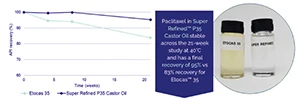
Let’s understand the impact of excipient selection on stability, the performance of paclitaxel was evaluated in Etocas™ 35 (Polyoxyl 35 castor oil, standard grade) and SR P35 Castor Oil under accelerated conditions. Paclitaxel stability was expressed as percent API recovery following storage at 40 °C for 21 weeks (Figure 1). The results demonstrate higher recovery of paclitaxel in SR P35 Castor Oil, indicating its suitability for maintaining drug stability under accelerated conditions. For formulators developing complex formulations or generic injectables, could excipient purity be a decisive factor in achieving consistent performance? The evidence strongly supports this conclusion.
Improved oxidative stability – polyethylene glycol 400 (PEG 400)
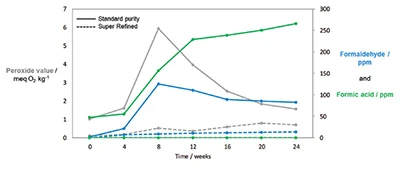
The oxidative stability of excipients plays an important role in overall formulation performance, particularly for PEG 400, which can undergo oxidative degradation under stressed conditions.
For formulators, this raises a key question: Could excipient peroxides be driving drug instability?
Since PEGs are often used at relatively high levels, it is critical that they do not contribute to drug degradation. As illustrated in Figure 2, the data suggest that lower peroxide levels, combined with storage under nitrogen, help minimise oxidative degradation in SR excipients compared with standard compendial equivalent, highlighting their clear benefits and added value in drug development.
Whether it’s improved API stability in parenteral formulations where purity is paramount, or improving capsule performance, SR excipients are engineered to address complex formulation challenges, helping formulators de-risk development, accelerate time-to-market and deliver better patient outcomes.
Beyond replication: smarter generics through strategic formulation
Value added generics increasingly rely on high-quality, multifunctional, specialised excipients and its more than simply supporting drug formulations. These super generics differentiate on performance, stability and patient experience. With the right excipients, generics can go beyond basic equivalence to deliver meaningful innovation in highly competitive markets. In the realm of topical R&D, excipients can completely reshape how a drug performs. When penetration enhancers and liquid crystal emulsifiers are used thoughtfully, they can increase local bioavailability or extend how long the drug stays on the skin, reducing how often patients need to apply it. This often leads formulators to ask: How can we enhance skin penetration without increasing irritation?
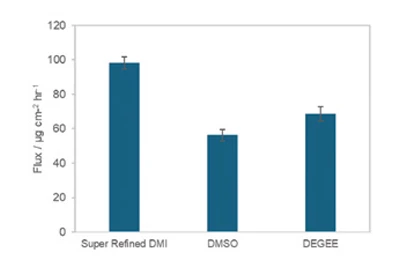
Super Refined™ DMI (Dimethyl Isosorbide) works by increasing the solubility of APIs in the skin. As shown in Figure 3, the skin study evaluated API delivery rates (flux) from simple formulations, comparing SR DMI with well‑known penetration enhancers such as DMSO and diethylene glycol monoethyl ether. Among the formulations tested, SR DMI showed the highest flux, indicating the most efficient API delivery into the skin. This superior ability to enhance dermal penetration is a key reason why DMI is a valuable excipient for topical drug delivery.
By choosing emollients with a sound understanding of skin science and delivery mechanisms, formulators can create light, elegant, non-greasy products with improved texture and right conditions for skin moisturisation. Formulators commonly ask: Which emollients balance sensory feel with hydration? How can skin lipids be better supported? Emollients such as Crodamol™ ISIS (Isostearyl Isostearate), Crodamol™ IPIS (Isopropyl Isostearate), and Arlamol™ PS11E (Polyoxypropylene Stearyl Ether) offer more than just basic moisturisation, they provide innovative skin‑hydration benefits that support improved patient outcomes.
Croda Pharma’s high‑purity lanolin and lanolin derivatives are exceptional natural emollients, closely mimicking and enhancing the functions of human skin lipids to help maintain healthy, well‑hydrated skin. (Figure 4)
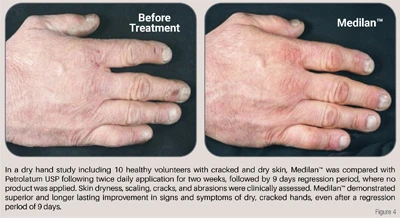
Together, these formulation advances support improved patient adherence and can even lead to stronger therapeutic outcomes relative to the innovator product.
More than just your ingredients provider
As a true technical partner, Croda Pharma supports formulators from concept through commercialisation, bringing together formulation expertise, excipient selection guidance, comprehensive regulatory support, and reliable global supply. Backed by a global network of scientists and application specialists, we work closely with customers to develop robust formulations, validate performance, and accelerate innovation. And with high‑quality ingredients, next-gen research, and a genuine commitment to sustainable innovation, we help brands turn great ideas into meaningful products.
Discover our solutions at www.crodapharma.com