Blockchain for Data Integrity in Biopharma
Myth or Reality?
Reshma Kodumuru, Computer System Validation (CSV) leader, KBI Biopharma
Blockchain promises immutable records for biopharma data integrity, but practical value depends on use case. This article evaluates blockchain in clinical trials, supply chains, and manufacturing—highlighting pilots, benefits for shared provenance and auditability, and limits versus traditional systems. It also reviews technical integration, privacy, validation, and regulatory barriers.
Why Data Integrity Matters More Than Ever
Data integrity in the Biopharmaceutical industry is a key requirement for maintaining public trust in patient safety and product quality, while supporting regulatory compliance. It provides assurance that data generated during the entire lifecycle of a pharmaceutical product are complete, accurate, reliable, and compliant with regulations through the use of the ALCOA+ standards accepted internationally by regulatory bodies.
The increasing use of digital technologies across all areas of regulated research, clinical trials, and manufacturing has resulted in an exponential increase in the volume and complexity of regulated data, thereby increasing the importance of data integrity frameworks while simultaneously making them increasingly vulnerable (1, 2).
Regulatory bodies such as the FDA, EMA, MHRA, and WHO have responded to these developments with enhanced scrutiny of regulated data; inspection results and warning letters issued consistently identify deficiencies in data integrity as the primary reason for enforcement actions resulting in clinical trial delays, product recall, and loss of reputation, which can ultimately compromise patient safety (3, 4).
Blockchain technology has emerged as a potential enabler of data integrity because of the immutable and auditable properties of blockchain, however; lessons learned from experiences in other regulated industries indicate caution should be taken in assuming that blockchain will represent a panacea for data integrity issues across the biopharma industry and raise questions regarding the practicality and limitations of using blockchain for ensuring data integrity in biopharma (5, 6).
Understanding Data Integrity Challenges in Biopharma
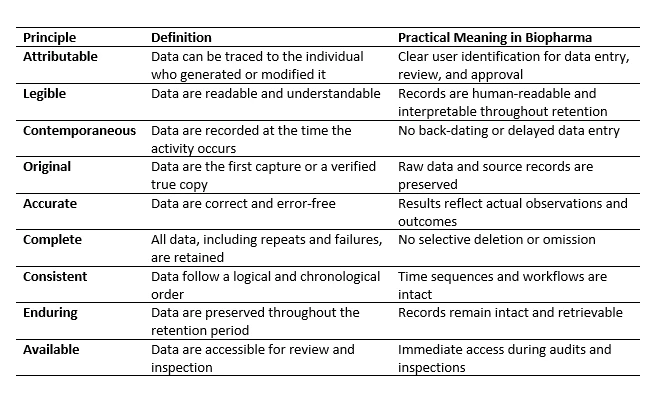
In the biopharmaceutical industry, product quality, patient safety, and regulatory compliance rely mainly on data integrity, which is the primary basis for all of them. The ALCOA+ principles, which describe the requirements needed to ensure data reliability across the product lifecycle, frame the regulatory expectations for data integrity in biopharma (summarized in Table 1). These standards are applicable across all stages of a product's life cycle, including research, clinical development, manufacturing, and quality operations, for both paper and electronic records (2).
Despite explicit regulatory guidance, data integrity regularly breaks down due to manual data entry, antiquated software, fragmented data across Contract Manufacturing Organizations (CMOs) and Contract Research Organizations (CROs), and inadequate governance structures. Recurring inspection findings include limited real-time traceability, undocumented changes, and deficiencies in the audit trail. Traditional centralised systems find it more difficult to provide safe, transparent, and scalable oversight as data volumes increase under Industry 4.0 (1, 7).
Table 1. ALCOA+ Principles for Data Integrity in Biopharma
Blockchain Fundamentals: Beyond the Buzzwords
A blockchain is an open-source, decentralised ledger system that stores information across multiple nodes on a peer-to-peer network rather than a single central server. Because blockchain systems have all parties storing information, there is a greater degree of transparency and security when using blockchain for recordkeeping. However, blockchain is not a data analysis platform, a validation mechanism, nor an automated compliance application. The benefit of blockchain depends on how it is designed and governed (5). Blockchain has several key attributes that make it appealing for use in regulated environments. These include immutability, distributed replication, hash functions, consensus algorithms, and timestamped blocks. These features allow blockchain to provide a method for tracking and auditing information (5).
There are three types of blockchains: public, private, and permissioned. Permissioned blockchains are typically the most applicable to biopharmaceutical companies because they allow for controlled participant roles, specific user access, and align with privacy requirements and regulatory oversight (6, 8). It is also important to note that blockchain is not equivalent to cryptocurrencies. Also, just because data is stored immutably does not mean it is accurate or compliant. Inadequate design of upstream control systems and governance processes will still allow the storage of inaccurate or non-compliant data (6).
Blockchain for Data Integrity in Biopharma: Promise versus Practical Reality
The alignment between data integrity technology attributes and the ALCOA+ standards for compliance with regulations that support the use of blockchain in the biopharmaceutical industry provides an opportunity to increase trustworthiness of regulated data systems through the use of several technologies that include: immutable data, data entry based on cryptographic hash functions; distributed ledger technology; consensus algorithms; and time stamped records. Although these attributes may provide a basis for increased trustworthiness of regulated data systems, their alignment with data integrity attributes is neither complete nor unconditional (9). A permissioned blockchain system with well-implemented, robust identity management and access control will enable the use of blockchain for attribution and time-aligned documentation through the use of the identities of users submitting data and the timestamp associated with the submission of that data. Additionally, replication and cryptographically linking original records will provide additional assurance of originality and durability of the record. Time-stamped immutable records will also increase auditability and traceability of data across organisations. However, the association between blockchain attributes and data integrity attributes is limited and dependent upon the context in which they are used.
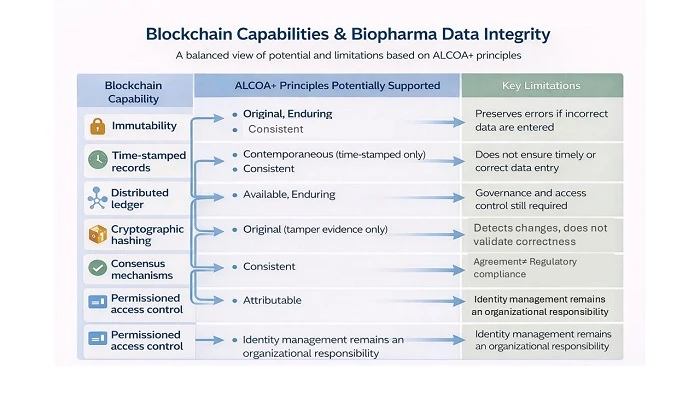
Figure 1. Mapping Blockchain Capabilities to ALCOA+ Principles
Blockchain can support traceability and tamper evidence, but it does not ensure data accuracy, completeness, or regulatory compliance on its own
The shortcomings of blockchain are substantial. While blockchain provides an immutable record of the transactional history, it does not provide assurance regarding the accuracy and quality of the original data entered into the system. Therefore, if incorrect or altered data is recorded in the blockchain, the blockchain will preserve those inaccuracies and potentially compound integrity risks. Human actions, inadequate policies, poor governance, and a lack of proper configuration of systems are common causes of data integrity failures, which cannot be addressed by blockchain alone (2). Additionally, blockchain does not eliminate the need for validated systems, Standard Operating Procedures (SOPs), employee training, and a quality culture (2). The potential for operational constraints also limits the potential benefits of blockchain. Integration with legacy systems, the complexities of vendor relationships, and confidentiality concerns create operational barriers to integrating blockchain into existing business processes. Permissioned models of blockchain also create additional layers of complexity from a governance perspective. Until such time as regulatory bodies formally endorse blockchain technology as a means of ensuring data integrity, blockchain should be viewed as an enabling technology for ensuring data integrity, but not as a substitute for regulatory compliance (1, 6).
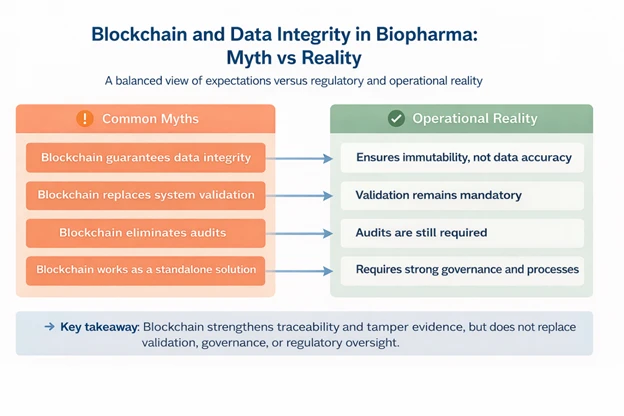
Figure 2: Myth vs Reality: What Blockchain Can, and Cannot, Solve
Blockchain as an enabler, not a standalone solution
Importance of data governance, SOPs, and human accountability
Potential Applications of Blockchain for Data Integrity in Biopharma
Blockchain's value to biopharma can be seen in an operational/Regulatory context and is best utilised for targeted/Conditional use of Data and where data is shared across organisational boundaries, and where Tamper Evidence and Traceability are valuable. This would likely allow blockchain to "augment" current data integrity controls, rather than replacing them (10,11)
When it comes to clinical trials, data are created at multiple points, including sponsors, sites, CROs, technology vendors, etc.; therefore, there are risks associated with traceability and version control. Blockchain could potentially support cross-site data traceability by way of shared, time-stamped ledgers that document key trial events such as protocol amendments and data submissions. Immutable audit trails will add additional confidence in protocol changes and dataset provenance, particularly in decentralised trial models. Blockchain-based version control may also support informed consent management; this will depend upon robust identity management and upstream data quality (1,8).
In manufacturing and quality operations, Blockchain has been proposed to enhance trust in electronic batch records and data exchanged between sponsors and CMOs. The time-stamped and tamper-evident nature of these records could also increase transparency surrounding deviations, change control, and corrective actions. However, blockchain does not replace validated systems or procedural controls, and integration into legacy infrastructure is challenging (1, 8).
In supply chain, blockchain may support end-to-end drug traceability, anti-counterfeiting Efforts, cold chain data integrity, and when integrated with IoT sensors, complement serialization requirements such as DSCSA and EU FMD (6).
Blockchain could be a viable way to facilitate pharmacovigilance and adverse events through secure adverse event reporting, which allows for clear attribution and traceable reporting over extended periods of time; however, blockchain technology still faces several significant challenges regarding governance and data standardization. These use cases also clearly show how blockchain can serve as a supporting tool in addition to providing a means for utilising this technology. An understanding of its proper application (i.e., scoping), a permissioned architecture, and an integration into existing GxP frameworks (5).
Adoption Readiness and Decision Criteria for Biopharma Leaders
Blockchain could have a significant impact if data exchange occurs between organisations and there are ongoing problems related to trust, traceability and tampering with data. If data integrity issues are primarily due to procedural weaknesses, lack of employee education/training, or suboptimal system setup, enhancing an organisation's quality and governance systems will likely result in better benefits at less risk (2).
A company must be ready to adopt blockchain. In order to adopt blockchain, a company must go through change management, user training, and develop cross-functional agreements. Blockchain can increase complexity in a company’s operations without improving compliance, unless that company has a strong quality culture (2).
Additional factors that influence a decision to implement blockchain include cost and capabilities of the organisation, especially smaller and medium-sized organisations that have difficulty in determining the ROI on the investment in blockchain and lack the necessary skill sets to operate blockchain (6). Lastly, the regulatory environment must support the implementation of blockchain. Blockchain cannot replace traditional compliance controls and must work seamlessly with validated systems and existing GxP processes (1).
Overall, the best way to implement blockchain is to do so in an incremental manner as a complementary enabling tool that can be used selectively in areas where high value exists rather than as a foundational compliance platform.
Take-Home Message: Myth, Reality, or Conditional Tool?
Blockchain technology has garnered substantial interest in addressing data integrity issues in biopharmaceutical development. Nevertheless, the role that blockchain will serve in this context can be better defined as an enabling factor contingent upon specific conditions. Although some characteristics of blockchain technology (e.g., immutability, traceability, and auditability) align with certain ALCOA+ principles, blockchain technology itself does not address the fundamental causes of integrity failures, i.e., poor data entry, human actions/behavior, inadequate or weak procedures, and gaps in governance. The regulatory agencies continue to focus on a quality culture built upon validated systems, documented processes, and the belief that blockchain technology cannot replace these expectations. The role of blockchain technology in relation to GxP regulations is to serve as a selective tool to augment (not replace) existing frameworks for compliance. Therefore, the value of blockchain technology to pharmaceutical manufacturing will be directly related to the discipline, with which it is implemented and governed, as well as regulatory acceptance and support, as opposed to simply an innovative use of new technologies.
Future Outlook: Is Blockchain the Future of Data Integrity in Biopharma?
Blockchain technology has the potential to significantly enhance the safety, quality, and efficiency of drug development and delivery. However, in the short term, the actual utilisation of blockchain will be limited to only a few high-risk use cases across organisations (i.e., sponsor-CRO interfaces, manufacturing networks, and supply chain traceability) due to the need to ensure compliance with regulations as well as the need to ensure the overall validation of the data collected. In the longer term, blockchain could become an essential part of a larger digital system involving cloud platforms, IoT-based data collection, and advanced analytical tools to create a trustworthy audit trail. Regulatory bodies are expected to be hesitant in adopting blockchain technologies, primarily due to blockchain's proven reliability and its ability to show alignment with established, validated systems. Leaders in biopharmaceuticals should view blockchain as an area where they can cautiously test blockchain for specific areas that pose a high risk of data integrity issues and also focus on maintaining and emphasizing strong governance, process disciplines, and human accountability to prevent themselves from becoming overly influenced by the "hype" surrounding blockchain.
References:
1. Alosert H, Savery J, Rheaume J, Cheeks M, Turner R, Spencer C, S Farid S, Goldrick S. Data integrity within the biopharmaceutical sector in the era of Industry 4.0. Biotechnol J. 2022 Jun;17(6):e2100609. doi: 10.1002/biot.202100609. Epub 2022 Apr 7. PMID: 35318814.
2. Jaiswal, Himani & S., Muddukrishna & Kulyadi, Girish. (2020). Data Integrity Violations: A Challenge to the Pharmaceutical Industry. International Journal of Pharmaceutical Quality Assurance. 11. 196-198. 10.25258/ijpqa.11.1.30.
3. Ingale MH, Tayade MC, Patil YP, Salunkhe R. Data Integrity Violations in the Pharmaceutical Industry and Regulatory Measures. International Journal of Pharmaceutical Quality Assurance. 2023;14(2):416-420.
4. James, Remya & Das, Srija & Kumari, Anjali & Rekdal, Mikal & Pai, K. & Krishna, Muddu. (2021). A Recent Regulatory Update on Consequences of Data Integrity Issues and its Management in Pharmaceutical Scenario. Indian Journal of Pharmaceutical Education and Research. 55. s616-s622. 10.5530/ijper.55.2s.134.
5. Habib, G., Sharma, S., Ibrahim, S., Ahmad, I., Qureshi, S., & Ishfaq, M. (2022). Blockchain Technology: Benefits, Challenges, Applications, and Integration of Blockchain Technology with Cloud Computing. Future Internet, 14(11), 341. https://doi.org/10.3390/fi14110341
6. Kumar, Akhil & Liu, Rong & Shan, Jay. (2019). Is Blockchain a Silver Bullet for Supply Chain Management? Technical Challenges and Research Opportunities: Is Blockchain a Silver Bullet for Supply Chain Management?. Decision Sciences. 51. 10.1111/deci.12396
7. Gupta, Krishna. (2023). Ensuring data integrity in the pharmaceutical sector. International Journal of Pharmaceutical Chemistry and Analysis. 10. 218-219. 10.18231/j.ijpca.2023.037.
8. Perera, S., Nanayakkara, S., Rodrigo, M. N. N., Senaratne, S., & Weinand, R. (2020). Blockchain technology: Is it hype or real in the construction industry? Journal of Industrial Information Integration, 17, 100125. https://doi.org/10.1016/j.jii.2020.100125
9. Biswal, A., & Shah, C. (2026). Data integrity in pharmaceutical quality assurance: A review based on ALCOA principles. International Journal of Pharmacy and Pharmaceutical Sciences, 8, 148–153. https://doi.org/10.33545/26647222.2026.v8.i1b.300
10. Gaynor M, Gillespie K, Roe A, Crannage E, Tuttle-Newhall JE. Blockchain Applications in the Pharmaceutical Industry. Blockchain Healthc Today. 2024 Apr 30;7. doi: 10.30953/bhty.v7.298. PMID: 38715760; PMCID: PMC11073477.
11. Yaren, H. (2022). Is Blockchain Technology a Silver Bullet for a Customs Environment? World Customs Journal.
.webp)
Reshma Kodumuru is a Computer System Validation (CSV) leader at KBI Biopharma with expertise in data integrity and regulatory compliance. She specialises in designing and implementing validation frameworks that enhance operational efficiency within the biopharmaceutical industry, bridging complex data systems with strategic, compliant, and effective business solutions.