Navigating Regulatory Frameworks: “Generic Approvals in Latin America’s Two Giants- Brazil & Mexico
Bhavya Sridevi Sundaraneedi, Master’s student of Regulatory Affairs, National Institute of Pharmaceutical Education and Research (NIPER- Raebareli).
Dr. Rahul Shukla, Assistant Professor, Department of Pharmaceutics, National Institute of Pharmaceutical Education and Research (NIPER- Raebareli).
Latin America is a rapidly expanding pharmaceutical market, with Brazil and Mexico leading the region in generics. This article presents a detailed overview of the regulatory pathways for the approval of generics in Brazil and Mexico. It discusses the role of regulatory agencies of Brazil and Mexico, dossier submission formats, GMP certification, review timelines, and fee details for registration. Moreover, regulatory progress such as harmonisation with international standards is improving global confidence. Alongside, challenges remain in pharmacovigilance. Overall, understanding the regulations of Brazil and Mexico is crucial for pharmaceutical companies aiming to enter Latin America’s generic drug market.
Introduction
The pharmaceutical products that can often be substituted with a previously approved brand-new product, manufactured without the innovator’s license and marketed upon the expiry of the patent, are called as generics. Generics account for the 37% of the global pharmaceutical prescription sales. The Generic Drugs segment is expanding at a faster rate and is expected to achieve 8.5% Compound Annual Growth Rate (CAGR) by the end of 2028. The global pharmaceutical market can be segmented into 2 markets: Regulated & Emerging/Semi-regulated. Emerging markets include countries that are yet to develop well-defined drug regulations, such as those in the Asia Pacific, Latin America (LATAM), Eastern Europe, and Africa.
Regulatory Landscape- Brazil & Mexico
Over the past two and a half decades, the pharmaceutical sector in LATAM has experienced consistent growth. Since 2008, LATAM has been recognised as the world’s fastest-growing market for generic drug manufacturers. The region is transforming through the harmonisation of laws, regulations, guidelines, and standards. The requirements for generic drug registration in the LATAM region are largely country- specific, with no unified procedure across nations. Common guidelines from groups like PAHO (Pan American Health Organisation), WHO (World Health Organisation) are implemented. The regulatory regime in LATAM comprises 3 categories that categorise the countries based on the level of strictness of regulations for the registration of pharmaceutical products. Countries under Category I follow stringent and well-established regulations, whereas countries categorised under Category III have very poor regulations. Category II countries have moderate regulations that are not as stringent as those in Category I. The categorisation of countries is shown in Fig 1.
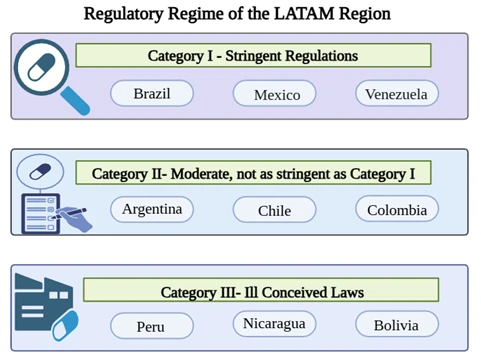
Figure 1: Regulatory Regime of the LATAM region
Key market players of LATAM include Brazil, Mexico, Colombia, Argentina, Chile, and Peru. In Brazil, the end-to-end regulatory oversight of pharmaceutical products is scrutinised by ANVISA (Agencia Nacional de Vigilancia Sanitaria). In Brazil, 70% of the total pharma sales solely include generics. The Mexican pharmaceutical industry ranks second in Latin America. COFEPRIS (Federal Commission for the Protection Against Sanitary Risks) is the agency responsible for the registration, approval, and labelling of pharmaceutical products, medical devices, and dietary supplements in Mexico.
Generic Drug Registration- Brazil & Mexico
In Mexico, registration of generics should align with the Mexican Official Standards (Normas Oficiales Mexicanas, abbreviated as NOMs). COFEPRIS-04-004-B & COFEPRIS-04-004-D provide the procedure of sanitary registration of generics. In Mexico, the Common Technical Document (CTD) format with 5 modules is followed. The registration dossier is made up of administrative documents, quality documents, stability summaries, post-approval stability protocols, bioequivalence study, and bio waiver study. The COFEPRIS introduced an electronic system for product registrations (RUPA- National Register of Accredited Persons & FIEL- Advanced Electronic Signature, and the electronic payment tools). As per ANVISA, RDCs are the regulatory standard issued by its Collegiate Board. RDC 753 provides information on generic, innovative and similar products registration. The generic medicines that need to be registered under ANVISA must adopt the nomenclature mentioned in the DCB list of Brazil (Brazilian Common Denomination), as mentioned in the RDC no. 469. The Brazil registration dossier is similar to COFEPRIS guidelines except for the CTD format, as this document is not implemented for generic registration in ANVISA. However, the checklist documents format is similar to the CTD structure and is submitted via electronic means like Solicita & SEI. In Brazil, there is a Specific Law 9787/1999 that governs the generic drugs. It outlines the requirements for generic medications that are to be marketed. As per the law, the secondary packaging of the generic drugs launched recently in Brazil should feature a yellow stripe with a label ‘Medicamento Genérico’ [generic medicine] marked on it and the ‘G’ logo. The registration procedure and the country-specific documents required for registration of generics are shown in the fig 2.
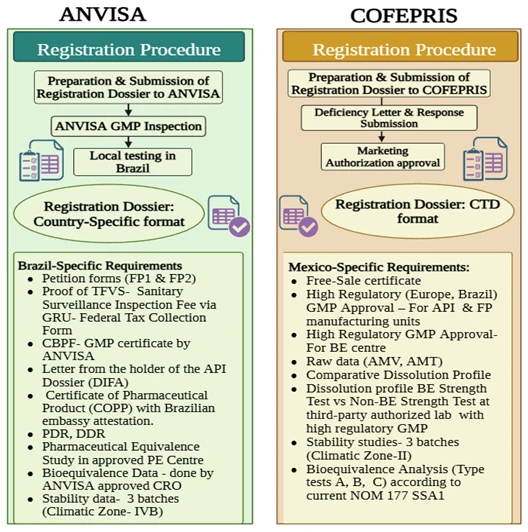
Figure 2: Generic Drug Registration in Brazil & Mexico
GMP requirements- ANVISA & COFEPRIS
In Brazil & Mexico, the inspection of GMP is a prerequisite for the submission of a registration dossier. The certificate of GMP must be annexed to the dossier before the submission. A valid certificate of GMP issued by ANVISA, addressed as CBPF in Brazil, is required for the registration of generic medicines. For this, an application must be submitted to ANVISA for the conduct of a GMP inspection. The application form includes a signed and stamped Petition form. It should be attached with a valid GMP certificate issued by the competent authority of the applicant’s origin country. The certificates can be submitted either in English or Spanish without the need for translation. The other documents are the Plant/Site Master File – SMF, Annual Product Quality Review (APQR) data / Risk assessment reports / Process validation data, and Inspection Report issued by any other health authorities, if available. The inspection of the manufacturing site is performed after 6 months of submission of the request for inspection. When the inspection is done, ANVISA issues the GMP certificate after 45 to 60 days to the company. Renewal inspections are conducted every two years.
COFEPRIS also requires the GMP certificate to be attached as part of the regulatory dossier. The inspection will be conducted by the agency (COFEPRIS) or a COFEPRIS-authorised third party. COFEPRIS also accepts certificates issued by the health authorities with the high-sanitary surveillance standards, such as the FDA, ANVISA, Health Canada, EMA, PMDA, TGA or the competent authority of health in the country of origin. In cases where a legal representative holds a valid GMP certificate issued by any of these agencies, an inspection by the Mexican authority is not required.
This GMP certificate should be submitted either as the original or as a notary-certified copy, duly legalised. It should be written in Spanish or should be accompanied by an official Spanish translation by an authorised translator. If the GMP certificate of the health authority of the origin country is not recognised by the COFEPRIS, risk assessment analysis will be conducted to evaluate compliance with the GMP standards. If the analysis reports are found to be inadequate, then COFEPRIS conducts an on-site inspection of the manufacturing site to verify compliance with GMP standards. The applicant should request the inspection through the established administrative process, and the receipt for the application for inspection must be submitted to the Commission of Sanitary Authorisation. Upon completion of inspection, the applicants receive an official confirmation (constancia) from COFEPRIS indicating acceptance of the GMP certificate, which should be included in the regulatory dossier. GMP certificates issued by COFEPRIS are valid for a period of 30 months.
Review of Registration Dossier
As per the ANVISA guidelines, the applicant company can submit the documents (Registration Document Information Form (FIDR), addition of package leaflet, labelling, and trade name) within 10 days after submission of the registration dossier. These documents are known as post-submission documents. After submission of the registration dossier, ANVISA evaluates the quality, efficacy, labelling modules, FIDR, and reviews bioequivalence data. Then, ANVISA notifies the CADIFA process- A letter in Brazil that mandates an API dossier complies with the regulations. The Drug Market Regulation Chamber (CMED) discuss the cost with the company. Then, the GMP inspection is carried out by ANVISA to grant the marketing authorisation. In Mexico, the applicant company submits the dossier to COFEPRIS. COFEPRIS evaluates the dossier and issues a deficiency letter to the applicant, then the applicant submits the response. COFEPRIS reviews the response and approves the drug to grant marketing authorisation.
Dossier evaluation timeline and Fee details
The registration of generics in Brazil is a bit complex process, but the fee for registering a product is lower. The Brazilian Regulatory Agency motivates the registration of generics by providing discounts on the application fee for registration. The timeline for generic drug registration in Brazil is 6-8 months, and the fee required for the registration of generics is 2096.90 USD. Whereas in Mexico, the timeline for the general registration takes about 24-36 months, and for post-approval changes, COFEPRIS takes nearly 12-24 months. The fee required for generic drug registration in Mexico is around 5700 USD, comparatively higher than that of Brazil. The registration validity is 5 years in both countries.
Conclusion
Brazil and Mexico are charting the future of Generics in Latin America. In 2025, the LATAM generic market was valued at approximately USD 24.85 billion, with Brazil holding the revenue of USD 13.7 billion & Mexico holding USD 7.7 billion in 2025. Recent regulatory advancements, including the digitalisation of submission processes, increased transparency, and agencies aligning with international benchmarks. This signifies a shift towards more efficient and predictable approval pathways that support global confidence in Latin America’s regulatory reforms. The biggest challenges in both markets are hindrances in pharmacovigilance and post-market surveillance, requiring strengthened safety monitoring systems. Regulatory agencies are increasingly focusing on detecting and acting on safety concerns throughout the product development life-cycle.
References
- I. Nacional, “RESOLUÇÃO - RDC No 753, DE 28 DE SETEMBRO DE 2022 - RESOLUÇÃO - RDC No 753, DE 28 DE SETEMBRO DE 2022 - DOU - Imprensa Nacional,” www.in.gov.br. Available: https://www.in.gov.br/web/dou/-/resolucao-rdc-n-753-de-28-de-setembro-de-2022-433925794
- “COFEPRIS - Mexico Ministry of Health,” Emergo by UL. Available: https://www.emergobyul.com/resources/cofepris-mexico-ministry-health
- A. Ferreira, “Drugs Registration in Brazil.” Available: https://globalregulatorypartners.com/wp-content/uploads/Drug-Registration-in-Brazil_31March2020.final_.pdf
- E. Olivares Lopez, “Overview of New Drugs Registration in Mexico.” Available: https://globalregulatorypartners.com/wp-content/uploads/Registration-of-Drugs-in-Mexico-COFEPRIS-_04.16.20_global_regulatory_partners_-FINAL.pdf
- “Brazil Generic Pharmaceuticals Market Size & Outlook, 2033,” Grandviewresearch.com, 2026. Available: https://www.grandviewresearch.com/horizon/outlook/generic-pharmaceuticals-market/brazil. [Accessed: Feb. 10, 2026]
- Comisión Federal para la Protección contra Riesgos Sanitarios (COFEPRIS), “Lineamientos para la evaluación de medicamentos genéricos y biocomparables”, 2023. Available: https://www.gob.mx/cms/uploads/attachment/file/997063/COFEPRIS-04-004-B.pdf. [Accessed: Feb. 10, 2026]

Sundaraneedi Bhavya Sridevi is a Master’s student of Regulatory Affairs at National Institute of Pharmaceutical Education and Research (NIPER- Raebareli). She had a six-month internship experience at Hetero Labs in Regulatory affairs of Latin America. Her interests include global regulatory affairs and Latin American emerging market regulations.

Dr. Rahul Shukla, Assistant Professor at the Department of Pharmaceutics, NIPER Raebareli, Lucknow, an Institute of National Importance, under the Ministry of Chemicals & Fertilizers, Govt. of India. He was awarded SERB International Research Experience (SIRE) Fellow. Listed in Stanford University's Top 2% Scientists in Pharmaceutical Sciences Worldwide. Research Interest: Pharmaceutics, Nanomedicine, Particle Engineering, Bionanomaterials for various therapeutic applications.