1. How is artificial intelligence transforming the traditional drug discovery pipeline, and which stages of development are seeing the most measurable impact today?
AI technologies are influencing nearly every stage of the drug development lifecycle, from early discovery to post-market monitoring. Drug discovery pipelines currently use AI models to analyse complex multi-omic biological datasets—including genomic sequences, transcriptional profiles, protein structures, and metabolic pathways—to identify potential therapeutic targets and biomarkers. These models can rapidly detect patterns and build knowledge graphs for Gene Regulatory Networks (GRNs) at a systems biology level - that would be difficult to uncover through conventional experimental methods.
In addition to accelerating target and biomarker discovery, AI is also improving drug discovery through in silico molecular design and drug candidate optimisation. Computational models can simulate how molecules interact with biological targets (on-target and/ or off-target) with greater accuracy when trained on large real or synthetic data sets, enabling researchers to design better therapeutic molecules such as small molecules, antibodies, degraders, peptides and aptamers.
2. With drug development costs continuing to rise, how can AI-driven platforms realistically reduce R&D timelines and expenses without compromising scientific rigor or regulatory standards?
Once cost of running AI algorithms is considered, systems such as Large Language Models (LLMs) can reduce preclinical and clinical trial costs by automating data analysis, administrative workflows and documentation within a human-in-the-loop validated framework. This improves efficiency, creates standardization in documentation and decreases delays, the labour hours for trial activities, ultimately de-risking it and lowering overall project expenses.
3. Many pharmaceutical pipelines are experiencing stagnation despite technological advancements. In your view, how can AI help identify novel therapeutic targets that were previously overlooked using conventional approaches?
AI is not a magic box; its value depends on being guided by scientists and grounded in hypothesis-driven research. It does not operate independently but serves as an enabling tool that accelerates the discovery of novel biological targets by analysing large-scale multi-omic, multi-modal datasets including single cell, bulk sequencing, spatial transcriptomics data. For instance, protein prediction can reveal novel binding sites, interactions and epitopes and help prioritise drugs that target disease relevant GRNs. AI-driven literature mining can uncover hidden gene-disease associations, identify potential drug repurposing opportunities while integrating multi-omics data into knowledge graphs. Trained algorithms reduce experimental guesswork, shorten early drug discovery timelines, and help focus on promising therapeutic targets.
4. AI models depend heavily on high-quality datasets. What strategies are pharmaceutical companies adopting to overcome data silos, improve interoperability, and ensure access to diverse datasets for more reliable AI outcomes?
The effectiveness of AI in pharmaceutical research depends on access to high-quality data, yet fragmentation remains a major obstacle. Clinical trials, genomic databases, hospital records, and pharmacological information are often siloed across institutions, hindering integration. To address this, companies are implementing federated data networks, enabling collaborative AI model training without directly sharing sensitive patient information. Standardised frameworks and common ontologies enhance interoperability, while curated datasets target pharmacogenomics, drug safety, and toxicity improve model accuracy. Additionally, using properly consented data ensures compliance with modern regulations. Together, these strategies create integrated, reliable data ecosystems that strengthen AI-driven drug discovery and research.
5. Clinical trial recruitment and retention remain major challenges. How can AI-enabled predictive analytics improve patient selection, trial design, and overall trial efficiency?
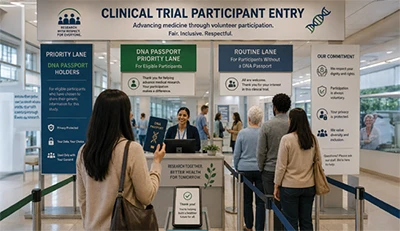
Clinical trials are among the most resource-intensive stages of drug development, often slowed by recruitment difficulties, diverse patient populations, and unforeseen safety issues. AI-driven predictive analytics can enhance trial efficiency by refining patient selection and enabling risk stratification. To take it a step further, imagine all clinical trial patients have their ‘DNA passport’ – with all pharmacogenomic interactions mapped. These could supports modern trial designs, such as adaptive trials, where patients are categorized as safe responders and unsafe responders and non-responders. Unsafe responders might be monitored closely, doses are adjusted in real time. These strategies allow smaller, faster, and more statistically robust trials, increasing success rates and reducing overall clinical trial failures.
6. Personalized medicine is often highlighted as a key benefit of AI. How is machine learning enabling more precise treatment pathways tailored to individual genetic, clinical, and lifestyle profiles?
The promise of personalized precision medicine has not been delivered in its entirety in the last three decades. There are reasons for that - One, therapeutic regimens often rely on population-level averages, which may not accurately reflect the biological diversity of individual patients; Two, systems biology is too complex making experimental validation of every biological network in various normal and/or diseased conditions next to impossible.
AI systems, relying extensively on large datasets and large language models, can integrate genomic data, clinical history, biomarker profiles, and lifestyle factors to create comprehensive patient response models. Moreover, they can be extrapolated with enough wet-lab evidence to create simulations and predictions. AI will not replace experimentation, but learns quickly from experiments to predict outcomes to various drugs in diverse disease conditions.
These models enable clinicians and researchers to predict drug safety alongside efficacy right at the onset and enable biomarker-guided patient monitoring plans deployed proactively, ultimately leading to significantly de-risked trials.
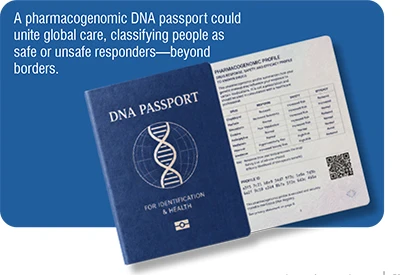
A secure and robust DNA passport approach for pharmacogenomic patient benefit will make personalized precision medicine a reality.
7. Drug safety remains a critical concern throughout the lifecycle of a therapy. How can AI enhance pharmacovigilance systems and enable earlier detection of potential adverse drug reactions?
Pharmacovigilance relies on post-market adverse event reporting systems over long durations with non-standard reporting methodologies across the globe. While valuable, these systems often detect safety issues only after a large number of patients have already been exposed to novel therapies. Machine learning models can analyse real-world evidence from electronic health records, clinical trial databases, and pharmacovigilance systems to detect emerging safety signals in a real-world scenario using state-of-the-art Retrieval-Augmented Generation with Model Context Protocol (RAG-MCPs) systems. These algorithms can also be trained to identify patient-specific safety risks. This proactive approach allows pharmaceutical companies and regulators to accurately predict trial cohort size, responder population, primary and secondary end-points and overall efficacy/safety outcomes way before the trial begins. Implementing targeted risk mitigation strategies can further reduce unsuitable dose exposures to patients, further de-risking and avoiding major clinical trial failures which stand at a 70-90% right now.
8. From a regulatory perspective, how are agencies adapting to the increasing use of AI in drug development, and what frameworks are emerging to validate AI-generated insights?
As AI becomes integral to pharmaceutical research, regulatory agencies worldwide are building frameworks to ensure its responsible use. Modernization efforts such as FDA Modernization Act 2.0, ICH E19, ICH S1B(R1), ICH M14, and ICH E6(R3) promote adaptive trial designs, non-animal testing, real-world data use, and risk-based oversight, emphasising Quality-by-Design and patient safety while streamlining development timelines. Concurrently, AI-specific guidance is emerging globally:
• The U.S. Food and Drug Administration released the FDA Draft Guidance on Artificial Intelligence in Drug and Biological Product Submissions, which proposes a model credibility framework requiring clear context of use, high-quality datasets, and robust validation of AI-generated outputs used in regulatory submissions.
• In the UK, the Medicines and Healthcare products Regulatory Agency has developed initiatives such as the Software and AI as a Medical Device Change Programme, which establishes regulatory principles for AI-based health technologies, including adaptive algorithms and post-market monitoring. Additionally, the UK government’s UK National AI Strategy supports responsible AI innovation in healthcare and life sciences.
• In Europe, the European Medicines Agency promotes principles such as the Guiding Principles for Good Machine Learning Practice for Medical Device Development, emphasizing transparency, reproducibility, and ongoing model monitoring.
• Japan’s Pharmaceuticals and Medical Devices Agency has issued guidance on AI-based medical software evaluation and supports regulatory science initiatives for AI validation.
• Similarly, China’s National Medical Products Administration has released technical guidelines for AI-enabled medical devices and data-driven evaluation methods.
• In India, the Central Drugs Standard Control Organisation and NITI Aayog support AI integration through initiatives like National Strategy for Artificial Intelligence (AI for All), which promotes responsible AI use in healthcare and pharmaceutical innovation.
• In South Korea, the Ministry of Food and Drug Safety has issued regulatory guidance and evaluation standards for AI-based medical devices and software, including pre-market review and lifecycle monitoring frameworks.
Collectively, these policies aim to ensure AI-generated insights are transparent, reproducible, scientifically robust, and compliant, while enabling flexible, innovative, and efficient drug development that leverages AI across research and clinical applications.
9. Ethical governance is becoming a central issue in AI adoption. How can pharmaceutical companies ensure transparency, fairness, and accountability in AI models used for clinical and safety decisions?
More and more, AI frameworks for biological systems require a “human-in-loop” format. Human oversight remains essential. AI systems used in clinical and safety decisions must operate within governance frameworks that incorporate expert review from clinicians, toxicologists, and regulatory specialists. Ensuring ethical AI deployment also requires active monitoring of dataset bias, particularly when historical data underrepresents certain populations.
10. Bias in healthcare data can influence AI outputs. What steps should the industry take to ensure diverse and representative datasets that support equitable treatment outcomes worldwide?
To achieve diverse and representative datasets that support equitable treatment outcomes globally, the pharmaceutical industry must adopt a multi-pronged approach.
• Clinical trials should include participants from varied geographies, ethnicities, ages, and socioeconomic backgrounds, aligning with initiatives like the FDA Diversity Action Plan Guidance.
• Integrating real-world data (RWD) from electronic health records, registries, and claims databases across multiple regions, as encouraged by ICH M14 Draft Guideline on Pharmacoepidemiological Studies Using Real-World Data, enhances dataset inclusivity.
• Global collaboration with regulators and organisations such as WHO can help standardize data collection and expand research in underserved populations.
• Ethical governance, transparent informed consent, and culturally sensitive engagement build trust with diverse communities.
• Additionally, AI and analytics models must be audited for bias, trained on balanced datasets, and validated across populations.
Collectively, these strategies ensure datasets are representative, scientifically robust, and capable of supporting equitable, globally relevant therapeutic outcomes.
A pharmacogenomic DNA passport could unite global care, classifying people as safe or unsafe responders—beyond borders.
11. Collaboration between pharmaceutical companies, technology firms, and healthcare providers is accelerating AI innovation. What partnership models are proving most effective in advancing AI-driven drug development?
It is still early to predict what successful partnerships in this space will ultimately look like. Currently, however, a range of global and regional organisations are collaborating to advance AI-driven drug development by providing access to biobank datasets. In parallel, AI models designed for decentralised and federated learning are being developed and deployed to ensure compliance with GDPR and other data privacy regulations, enabling secure, privacy-preserving analysis across multiple data sources.
12. Looking ahead, how do you see AI reshaping the role of scientists, clinicians, and data specialists within pharmaceutical research teams?
Over the next decade, AI is expected to become deeply embedded across the pharmaceutical value chain. AI should be seen as an enabler, not a replacement for scientists, clinicians, data analysts, or domain experts. Rather than substituting expertise, it enhances efficiency, robustness, and collaboration, helping professionals work more effectively. Over time, existing silos are expected to integrate into larger, connected networks, fostering better communication and more impactful scientific discoveries.
13. Over the next decade, what breakthrough developments in AI do you believe will most significantly transform how drugs are discovered, tested, approved, and delivered to patients globally?
In the near future, it is possible to see use of AI in drug discovery and development enabling earlier and more informed decision-making. Machine learning models can analyse diverse datasets, including genomic data, clinical outcomes, and pharmacological profiles, to predict potential safety and efficacy risks. Expedited target identification, better target prioritization, focused wet-lab target validation of key mechanisms of action will lead to a well-defined drug discovery pipeline.
One of the most impactful applications of AI lies in predictive toxicology. AI models capable of analysing drug-gene interactions, metabolic pathways, and biological responses can be used to build knowledge graphs and identify potential toxicity biomarkers. Such biomarkers can be used for safe responding patient stratification even before a drug candidate reaches human testing. By identifying safety risks earlier using pharmacogenomics tools, perhaps as a patient stratification tool during patient enrollment process in clinical trials, pharmaceutical companies can reduce proportion of patients with adverse drug reactions (ADRs) or Severe adverse effects (SAEs) and hence costly downstream clinical trial failures.
In silico drug discovery alongside, wet-lab experimentation will allow deeper understanding of target engagement, on-target efficacy and off-target toxicities. These insights allow research teams to prioritise promising drug candidates, identify high-risk molecules earlier, high risk patients earlier, optimise dosing strategies and improve clinical trial designs.