1. How is 3D printing fundamentally redefining the traditional drug development lifecycle, particularly in early-stage clinical research and formulation prototyping?
The emergence of 3D printing provides two distinct benefits in this area. First, researchers and formulators are now able to significantly shorten the timeline between trials by in-sourcing and controlling the production of test articles versus outsourcing (which has contingency into lab time cycles). Second, in terms of overall drug development, companies are substantially able to conduct development work and scale production using common hardware. This effectively eliminates the gap between development and calibrating production in a conventional manufacturing system.
2. Personalised dosing is often cited as a key advantage—what technical and operational barriers still exist in scaling patient-specific therapies using 3D printing?
The principal elements missing in this equation are awareness and experience. Awareness is a common pitfall of most emerging technologies; most market participants we engage with have only a basic understanding of 3D printing in general, available techniques, materials and potential use cases — so substantial education is required in connection with scaling of use of the technology. In addition, as we are in the early stages of use of this technology, the population of tangible examples remains low. As experience grows, particularly in the research and scientific community, users will be able to draft on ideas and the library of use cases will grow.
3. What are the current limitations in printable pharmaceutical-grade materials, and how are innovations in excipients and polymers addressing these gaps?
The answer here depends on the technology you are likely targeting for use. Extrusion-based technologies generally require some pre-mix of formulations prior to engaging in the print process, which typically includes a heat source, further changing the related chemistry. These pre-mix formulations are generally unique to each application, which requires an often complex qualification path for the material set before it is printed.
For powder-based technologies, such as binder jetting, materials are generally off-the-shelf and the room-temperature print process occurs under similar conditions to that of conventional manufacturing. APIs can be mixed either in the binder solutions or blended with the excipients. By leveraging excipients and API in their standard form, it is expected that binder jet printers will help shorten the adoption curve for pharmaceutical 3D printing.
4. With regulatory frameworks still catching up, how do you see global agencies adapting to accommodate 3D-printed drug products in both clinical and compounding settings?
Awareness and education are the key elements. The printing technology being used in these environments are not new — this technology has existed in different industry verticals for decades. The equipment is highly precise and includes a feedback loop and in-situ process monitoring that aligns with pharmaceutical manufacturing requirements. That said, there is an information gap as most industry professionals, including regulators, are unfamiliar with even the basic mechanics of the technology. Similar to other industries (automotive or aerospace as examples) the learning curve generally moves slowly at first, then accelerates. Once the industry develops a baseline understanding, a regulatory framework will naturally evolve.
5. How can manufacturers ensure batch consistency, reproducibility, and quality control in a process that is inherently flexible and decentralised?
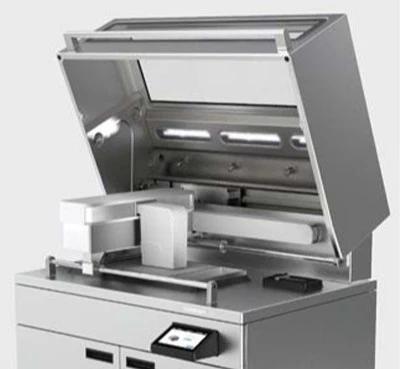
By automating processes that were previously labour intensive, manufacturers can expect to benefit from improved batch consistency, reproducibility and quality control. Binder jet printers include a robust software suite that enables a full GMP manufacturing environment, including robust software controls, sensors, process monitoring and constant print feedback. Manufacturers will benefit from automated material tracking and quality reports with each batch of tablets.
6. What impact will on-demand drug production have on supply chains, especially in terms of reducing waste, improving access, and managing inventory?
On-demand production has a few obvious benefits — first, printing can be timed much closer to the related demand (prescription). As a result, there will be a natural benefit to medications that have aggressive expiration lifecycles simply by closing this gap (versus pre-manufactured drugs). This has a separate, but related impact when considering the associated raw excipients which may be preserved in their manufactured form rather than deployed for production, again, closing the expiration gap. Second, the ability to shift production through printing physically closer to the end user creates a dramatic benefit when considering remote areas that do not have ready access to one or more advanced compounding pharmacies. To the extent that the process is automated and material control and instruction are appropriate — the compounding process may be simplified to a point to expand professional distribution in remote areas and assist those seeking solutions.
7. In what ways can 3D printing accelerate adaptive clinical trials, particularly in enabling rapid iteration of dosage forms and strengths?
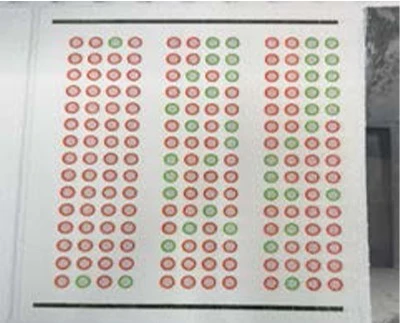
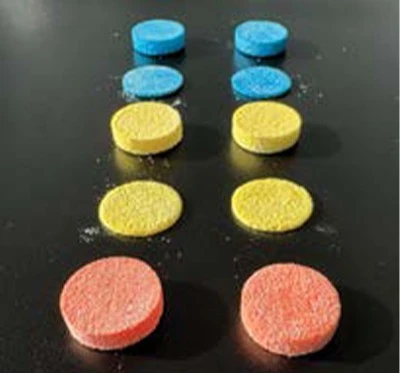
In a conventional setting, formulators often rely on third party labs to construct prototype dosage forms. Iterative forms created through this process require the same pathway to be utilised to ensure consistency — meaning that dosage forms are created and then analysed before additional refinement can occur and the process repeats. With 3D printing — multiple dosage forms, geometries, etc. can be created in a single print run inside of a controlled manufacturing environment. Further, formulators are able to in-source printers given their compact size (often benchtop enabled) which allows full freedom and flexibility to run iterations at their discretion and without a lead time gap.
8. Could you elaborate on the most promising applications of 3D printing in producing complex drug delivery systems, such as multilayered or controlled-release formulations?
Conventional manufacturing methods (whether large scale or small scale tableting) are geared toward creating uniform and consistent tablets with pre-defined physical properties. 3D printing opens up a new pathway to tablet development in that a specific tablet design can be created layer by layer. This layer-by-layer manufacturing process allows the developer to dictate material deposition which impacts how a person receives the drug. In addition, new tablet construction is available, particularly in powder-based printing, whereby multi-material combinations may be used to construct a unique table with a desired release profile. For example, core and shell printing which directs API into the center of the tablet with an exterior shell created that may leverage a unique material to either accelerate or slow the dissolution of the tablet, allowing for oral release, gastro release or gastrointestinal release.
9. How do you envision 3D printing integrating with digital health technologies (e.g., AI-driven diagnostics or patient data platforms) to enable truly individualised therapies?
3D printing serves as a natural physical extension of a digital workflow. For example, in current practice, a medical professional may prescribe a patient one or more medications based on standard dosage forms available commercially. A future practice may take those inputs, analyse them against digitally available patient medical records and recommend a custom output comprised of optimised dosage forms or perhaps an optimised blended dosage form (a “stack”). This information could then be analysed by the patients doctor and then sent directly to a queue where the prescription could be printed automatically based on those inputs in the most efficient way possible (routing to any number of available printers in a defined geographic region, or to a centralised hub where production of a complex solution may make sense).
10. How is 3D printing transforming traditional compounding practices in pharmacies and hospitals, and what skills or infrastructure upgrades are required?
We are in the very early stages of adoption in these environments. Accordingly, users in both environments are really just advancing their awareness of the capabilities of the technology and use cases are limited. Adoption and use cases are expected to accelerate at an advanced rate as personalized medicine remains a priority concern in tailoring optimised solutions to patients. Following the pattern developed in other industry verticals, education is key. Expect to see rapid deployment of printing technology at major global pharmaceutical universities (many have invested in this technology already) which serves to introduce and familiarise the next generation of pharmacists with these innovations. Equipment OEMs have already studied the standard environments for which this technology will operate and have tailored the equipment design to meet those standards, meaning that a significant investment or modification of infrastructure is likely not required for adoption.
11. What is the current cost-benefit equation for adopting 3D printing in pharmaceutical environments, and where do you see the strongest ROI emerging?
The immediate cost-benefit to adopting 3D printing is the extension of the existing workforce complement in a pharma environment. Standard practice requires detailed oversight over production by senior pharmacy professionals over pharmaceutical technicians. With an automated solution such as 3D printing, pharmaceutical technician output can be extended, resulting in higher output without a corresponding personnel increase. This benefit is in addition to cost savings associated with spoilage (expiration) or associated carry costs of raw material inventories.
12. What are the major compliance and risk management challenges associated with decentralised, on-site drug manufacturing using 3D printing technologies?
As with any new technology, education and training is critical. There is a learning curve with 3D printing, understanding the mechanics and the process and then following those steps to ensure appropriate handling of the product. OEMs are highly focused on safeguards to simplify the process. With respect to compliance, the principal challenge is aligning new technology with an existing framework. The most logical approach is that OEMs work closely with regulators in an open environment to ensure adherence to existing standards and address standard gaps that may not fully address the capabilities or potential of the equipment. This is already occurring in practice as leading regulators familiarise themselves with the technology and work directly with OEMs. Additionally, with binder jetting technology, formulators are using API and excipients in their existing forms, making both the manufacturing process and end-product more similar to conventional tablets than with extrusion-based technologies.
13. Looking ahead, which therapeutic areas (e.g., pediatrics, rare diseases, oncology) stand to benefit the most from 3D-printed pharmaceuticals, and why?
Solutions that require specific dosage requirements or are dose sensitive at a patient level are the most likely beneficiaries of 3D printing. Fundamentally this aligns most closely with pediatric or geriatric patients, but could apply over a broader range of patient cases. Rare disease solution production should see a significant push as more technologies come online and scale as conventional high-volume settings are not suited for investment in these areas.
14. How do you foresee the role of 3D printing evolving over the next 5-10 years in clinical research and pharmaceutical compounding, and what milestones should the industry watch for?
In clinical research, there is a current propensity to work with more exotic compounds and test the limits of chemistry in new and exciting ways. This is only being driven further by artificial intelligence identifying compounds and methods not previously explored. 3D printing is going to play a key role in development of these new formulations and should accelerate the timeline from concept to prototype to production. As a key milestone, we should expect to see announcements from major pharmaceutical companies in the coming development cycles which reference 3D printing capabilities as key conduit in introduction of new drugs.
In pharmaceutical compounding, the expectation is similar to what we have witnessed in aerospace in the industrial environment, also a highly regulated environment, where use cases and expansion amount to a slow, step-by-step adoption. As a key milestone, OEM statistics on growing installed base and adoption by major hospital systems should be indicators of success. Additionally, we expect customers who have already adopted these technologies to become more vocal about their successes.
Read the full article — it's free
Register with Pharma Focus Asia to unlock expert insights, research articles and in-depth industry analysis.