
Imagine trying to understand a six-month journey from a handful of photographs. One photograph is taken at the beginning, another weeks later, a third near the end and a fourth at the destination. Each image is accurate and useful, but much of the journey remains invisible: the route taken, the delays, the changes in direction and the experiences between those moments.
For decades, pharmaceutical research has faced a similar challenge. Clinical trials, registries and electronic health records have transformed our understanding of disease, enabled the development of life-changing therapies and generated vast amounts of evidence about how conditions progress and respond to treatment. Yet, despite their value, these data sources are fundamentally episodic.
A patient with Crohn's disease may spend thirty minutes with their clinician every six months. A person living with rheumatoid arthritis may complete one or two questionnaires each year. A patient enrolled in a clinical trial may attend a series of scheduled assessments over the course of a study. Each interaction generates a valuable data point, but the vast majority of the patient's experience lies between those moments.
Symptoms fluctuate. Sleep is disrupted. Fatigue comes and goes. Patients adapt their behaviour, avoid activities, change routines and make countless decisions about how to manage their condition. Disease unfolds continuously, but historically our ability to observe it has been intermittent. This is not because episodic observation represented the ideal way to study disease. It reflected the practical limitations of data collection and analysis. For decades, continuous observation of large patient populations was simply not possible. Even if the data could be collected, there was no realistic way to interpret it at scale.
That constraint is beginning to loosen. The widespread adoption of smartphones, health applications, wearable devices and connected technologies is generating an unprecedented volume of patient-generated health data, with digitally mature and mobile-first markets across Asia-Pacific likely to be especially important proving grounds for this shift. At the same time, advances in artificial intelligence are making it possible to analyse these previously unmanageable data streams and transform them into meaningful scientific insight. The result may be a fundamental shift in how pharmaceutical research understands disease: from studying snapshots to studying movies.
Why episodic evidence was the best we could get
Modern pharmaceutical research evolved within important technical constraints. Historically, collecting data was expensive and burdensome. Clinical visits required staff, facilities and patient time. Patient-reported outcomes were often captured using paper forms. Registries depended on periodic data entry. Electronic health records expanded the amount of information available, but remained tied to healthcare interactions. Researchers therefore focused, quite reasonably, on observations that could be collected conveniently, consistently and economically.
This approach delivered tremendous value. Clinical endpoints, biomarkers, imaging findings and physician assessments remain the foundation of evidence generation and will continue to be so for the foreseeable future. However, this evidence system also shaped the resolution at which disease could be observed. For much of modern medicine, disease has been measured at intervals of months or even years. These snapshots can tell us where a patient was at a particular moment in time, but they often reveal little about what happened between measurements.
That distinction matters because many of the questions facing pharmaceutical companies today are fundamentally longitudinal. Which patients are genuinely achieving treat-to-target goals, where treatment is adjusted against a defined clinical objective? Which patients remain poorly controlled despite appearing stable at review? What symptoms persist despite clinical remission? What early signals indicate that a treatment is succeeding, failing or wearing off between formal assessments? Answering these questions requires more than occasional snapshots. It requires a higher-resolution view of disease.
From snapshots to continuous observation
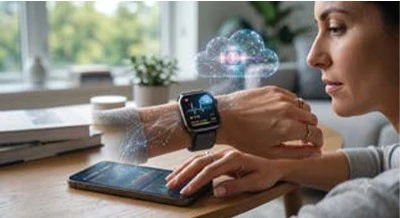
The widespread adoption of smartphones, wearables and connected devices is changing what can be observed. Patients are increasingly recording symptoms, quality of life, medication use, fatigue, mood and treatment experiences digitally. Wearable devices continuously capture information about activity, sleep, heart rate and other physiological measures. Together, these technologies provide a view of disease that is far richer than has historically been possible.
This is not simply a matter of generating more data. It is a matter of increasing observational resolution. A clinic visit may provide one observation every few months. A patient-reported outcome measure completed weekly provides a higher-resolution view. Daily symptom reporting offers greater detail still. Wearable devices can generate hundreds or thousands of observations each day. The same disease can therefore be observed at very different levels of resolution.
In large-scale inflammatory disease datasets generated through patient-facing digital platforms, it is common to see patients who would appear broadly stable at a clinic review but whose day-to-day records tell a more complicated story. One patient may show sustained stability over many months. Another may cycle through recurrent urgency, disrupted sleep, fatigue, missed activities and periods of declining confidence, only to look relatively well at the next formal assessment. These are not marginal details. They can be the difference between a patient who is clinically improved and a patient who is genuinely well controlled.
The opportunity is significant, but so is the analytical challenge. A single patient using a health application and wearable device may generate hundreds or thousands of observations each month. Across large populations, this rapidly expands into millions or billions of data points. Collecting such data is increasingly feasible; understanding it is the harder task.
Why AI matters
Much of the current discussion around artificial intelligence in healthcare focuses on automation, prediction or large language models. These applications are important, but AI may prove equally significant as a tool for understanding continuous patient journeys. Its value in this context is not that it creates new data, but that it allows previously inaccessible data to be analysed at scale.
Without advanced analytical techniques, continuous patient-generated datasets risk becoming overwhelming collections of disconnected observations. Human researchers cannot manually review millions of symptom reports, behavioural interactions and physiological measurements. Traditional statistical approaches can also struggle with the volume, frequency and complexity of such information, particularly when the aim is to integrate multiple forms of data collected at different intervals.
AI can help researchers identify patterns across large datasets, characterise disease trajectories, recognise meaningful subgroups, detect early signals of deterioration and uncover relationships that may otherwise remain hidden. It can also support the integration of multiple streams of information, from symptom reports and quality-of-life measures to wearable data and patient narratives, creating a more complete picture of the patient experience.
This does not replace traditional scientific methods. Instead, it expands the range of questions that researchers can realistically investigate. For decades, pharmaceutical research has largely been constrained to studying what could be measured and analysed economically. AI is helping to expand those boundaries by making continuous, high-resolution patient data interpretable at scale.
New opportunities for pharmaceutical research
The most immediate opportunity is identifying poorly controlled disease and residual burden that remain hidden between formal assessments. Treat-to-target strategies have transformed care across many therapeutic areas, but treatment targets are often assessed intermittently. Continuous patient-generated data offers the possibility of identifying patients whose day-today experience remains suboptimal despite apparently favourable clinical assessments.
This matters commercially as well as clinically. Pharmaceutical companies increasingly need to understand not only whether a treatment works in aggregate, but which patients continue to experience burden, when that burden emerges, how it affects quality of life and whether it represents an opportunity for treatment optimisation, additional support or improved pathway design. In areas such as immunology, where multiple effective therapies compete and differentiation is increasingly subtle, understanding the patient journey between visits can become a source of meaningful insight.
Many patients achieve favourable clinical outcomes yet continue to experience symptoms that affect daily life. Fatigue, disrupted sleep, bowel urgency, pain, anxiety and activity limitation are often poorly understood because they are not consistently captured within traditional datasets. Continuous patient-generated data offers a way to examine not only whether symptoms exist, but how frequently they occur, how severely they affect patients and how they evolve over time.
A second opportunity is a deeper understanding of treatment response. Traditional studies are often designed to determine whether a treatment works. Continuous data may help us understand how it works in practice, including periods of improvement, instability and recovery that occur between formal assessments. Two patients may achieve the same endpoint while following very different paths to get there.
Understanding those paths may reveal important insights about effectiveness, adherence, persistence and patient experience.
A longer-term opportunity lies in the development of new endpoints and outcome measures. Historically, endpoints have been shaped partly by what can be measured practically within clinical studies. As continuous datasets become more widely available, researchers may identify digital measures that correlate with established outcomes, respond earlier to treatment changes or capture dimensions of disease that matter most to patients. Such measures will require rigorous validation, but they represent an important area of future research.
Proceeding with appropriate caution
The opportunities are substantial, but it is important to avoid technological optimism that outpaces the evidence. Continuous patient-generated data is not a replacement for traditional evidence generation. Clinical assessments, laboratory testing, imaging, physician expertise and established clinical research methodologies remain essential.
The practical questions are not abstract. Who generates continuous data, and who does not? Are patients who engage regularly with digital tools representative of the broader treated population? How should researchers account for missing data, engagement decay and behavioural bias? How should app-derived measures be compared with established patient-reported outcomes, biomarkers, imaging and clinical assessments? What level of validation is needed before a digital measure can support medical affairs, payer or regulatory conversations? In cross-border regions such as Asia-Pacific, these questions also need to account for data governance, localisation and market-specific regulatory expectations.
These are familiar challenges in real-world evidence, but continuous data changes their scale and texture. A dataset may be large without being representative. It may be granular without being clinically meaningful. It may contain useful signals while still requiring careful calibration against established measures. AI can help identify patterns, but it does not remove the need for scientific judgement, validation and appropriate governance.
Continuous patient-generated data should therefore be viewed not as a shortcut around evidence generation, but as a potentially valuable addition to it. The objective should be to strengthen existing evidence frameworks by adding a richer understanding of what happens between traditional observation points.
Looking ahead
The pharmaceutical industry is entering a period in which both the quantity and resolution of available health data are expanding dramatically. Apps, wearables and connected technologies are enabling continuous observation of patient experiences at an unprecedented scale. Artificial intelligence is making it possible to analyse these data streams and extract meaningful insight from them.
Together, these developments offer an opportunity to move beyond a purely episodic understanding of disease. For decades, pharmaceutical research relied on snapshots, not because snapshots were ideal, but because they were all that could be analysed at scale. Today, that limitation is beginning to fade.
The transition from snapshots to movies will not happen overnight, nor will it replace the scientific foundations upon which modern medicine is built. But it may allow researchers to study disease in a way that more closely reflects how patients actually experience it: continuously, dynamically and in the context of everyday life.
The question for pharmaceutical organisations is no longer whether continuous patient data will become available. It is how quickly they can learn to harness it. Those that succeed may gain a fundamentally richer understanding of treatment response, unmet need and the realities of living with chronic disease than has ever before been possible.
Read the full article — it's free
Register with Pharma Focus Asia to unlock expert insights, research articles and in-depth industry analysis.