The Traditional Drug Discovery Bottleneck
Conventional drug discovery follows a linear and resource-intensive process: target identification, hit discovery, lead optimisation, preclinical testing, and clinical trials. Each stage carries substantial risk. Historically, researchers relied on labor-intensive laboratory experiments and heuristic-driven medicinal chemistry approaches. While these methods have produced life-saving medicines, their inefficiencies are evident. Failure rates in Phase II and Phase III clinical trials remain particularly high due to insufficient efficacy or unforeseen safety issues (Paul et al., 2010). AI introduces a data-centric paradigm that replaces trial-and-error strategies with predictive modeling and algorithm-driven decision-making. This shift enables researchers to analyse massive biological datasets in ways previously impossible.
AI in Target Identification and Validation
The first critical step in drug discovery is identifying biological targets linked to disease mechanisms. Advances in genomics, transcriptomics, and proteomics have generated vast datasets describing molecular interactions. However, extracting meaningful insights from this data exceeds traditional analytical capacities. Machine learning algorithms excel at pattern recognition within complex datasets. AI systems can identify gene-disease associations, uncover regulatory pathways, and predict protein interactions. A transformative breakthrough in this domain is AlphaFold, developed by DeepMind. AlphaFold’s ability to predict highly accurate three-dimensional protein structures from amino acid sequences has solved a decades-old scientific challenge (Jumper et al., 2021). Understanding protein structures accelerates the identification of druggable binding sites and reduces uncertainty in early-stage research. This capability dramatically shortens the time required for structural biology studies, allowing researchers to focus on therapeutic strategy rather than structural determination (Figure 1).
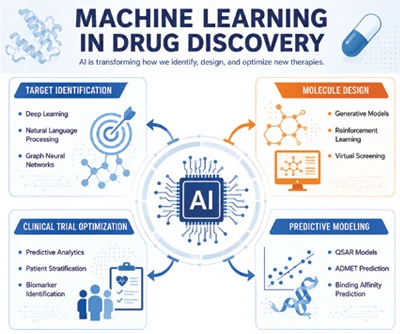
Figure 1. Artificial intelligence applications across the drug discovery and development pipeline
AI-Powered Molecular Design and Optimisation
Once a target is validated, the next step involves designing molecules capable of interacting effectively with it. Traditionally, medicinal chemists synthesised and tested thousands of compounds through iterative cycles. AI-driven generative models now accelerate this process. Deep learning systems, including variational autoencoders and generative adversarial networks, can design entirely new molecular structures optimised for potency, selectivity, and pharmacokinetic properties. Reinforcement learning further refines candidates by iteratively improving chemical features. A pioneering example is In silico Medicine, which uses AI to generate novel drug candidates in a fraction of the conventional timeline. In a landmark study, AI-enabled discovery of DDR1 kinase inhibitors progressed from target identification to preclinical candidate nomination in under 12 months (Zhavoronkov et al., 2019). Such achievements demonstrate AI’s capacity to compress timelines dramatically. Moreover, AI expands exploration beyond known chemical libraries, navigating vast chemical spaces that would be impractical for human researchers alone.
Drug Repurposing and Knowledge Graphs
AI is equally transformative in drug repurposing, identifying new therapeutic uses for existing drugs as they would have already undergone safety testing, development risks and costs are significantly lower. Companies such as BenevolentAI employ knowledge graphs and natural language processing to mine biomedical literature and clinical data. These systems identify hidden relationships between drugs, targets, and diseases, accelerating hypothesis generation. During global health crises, such AI-driven repurposing approaches have proven especially valuable in rapidly identifying candidate treatments.
Optimissing Clinical Trials
Clinical development represents the most expensive and failure-prone stage of drug discovery. AI improves clinical trials through predictive modeling, patient stratification, and real-time monitoring. Machine learning algorithms analyse electronic health records and genomic data to identify patients most likely to respond to specific therapies. This precision reduces heterogeneity in trial populations and increases statistical power. AI also predicts adverse drug reactions, enabling safer study designs. Digital health technologies, including wearable devices and remote monitoring platforms, generate continuous patient data streams. AI analyses these datasets to detect subtle physiological changes, improving endpoint accuracy and reducing dropout rates. By enhancing efficiency and predictive power, AI reduces the probability of costly late-stage failures.
Personalised Medicine and Precision Therapeutics
One of AI’s most promising contributions lies in personalised medicine. Rather than applying a one-size-fits-all approach, AI integrates multi-omic data, clinical histories, and biomarker profiles to tailor treatments to individual patients. Precision oncology exemplifies this transformation. Machine learning models identify genetic mutations driving tumour growth and recommend targeted therapies accordingly. By aligning treatments with patient-specific molecular characteristics, AI enhances efficacy while minimising adverse effects. As healthcare systems increasingly adopt data-driven frameworks, AI-powered decision support tools will become central to individualized treatment planning (Figure 2).
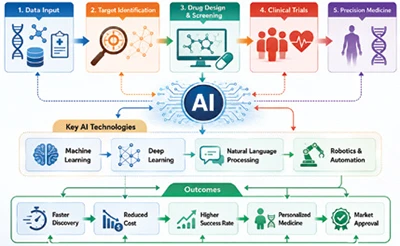
Figure 2. AI-driven drug discovery and development pipeline
Challenges and Ethical Considerations
Despite its transformative potential, AI in drug discovery faces significant challenges. High-quality data is essential for reliable model performance, yet biomedical datasets often contain biases, inconsistencies, or missing information. Poor data quality can produce misleading predictions. Regulatory frameworks must also evolve. Agencies such as the U.S. Food and Drug Administration (FDA) are developing guidelines to evaluate AI-generated evidence, but standards remain under refinement. Transparency and interpretability are critical, particularly when AI influences clinical decisions. Ethical considerations include patient data privacy, algorithmic bias, and equitable access to AI-driven therapies. Ensuring responsible innovation requires collaboration among technologists, clinicians, regulators, and ethicists.
The Future of AI-Driven Drug Discovery
The future of pharmaceutical research lies in the convergence of AI, robotics, automation, and high-throughput experimentation. Self-driving laboratories, where AI algorithms design experiments executed by robotic systems, are becoming a reality. These closed-loop systems continuously learn from experimental outcomes, refining predictions in real time. Collaborations between biotechnology firms, academic institutions, and technology companies are accelerating progress. Cloud computing infrastructure enables global data sharing and scalable model training. As computational power increases and datasets expand, predictive accuracy will continue to improve. Importantly, AI does not replace human expertise; rather, it augments scientific decision-making. By combining computational intelligence with clinical insight, researchers can prioritise the most promising therapeutic strategies.
Conclusion
Artificial intelligence is fundamentally reshaping drug discovery and development. From target identification and molecular design to clinical optimisation and personalised medicine, AI introduces speed, precision, and scalability into a traditionally slow and costly process. Breakthrough technologies such as AlphaFold demonstrate how AI can solve longstanding biological challenges, while innovative companies leverage machine learning to accelerate therapeutic innovation. Although challenges related to data quality, regulation, and ethics remain, continued interdisciplinary collaboration will address these barriers. As AI technologies mature, they hold the promise of reducing drug development timelines, lowering costs, and increasing the availability of effective therapies worldwide. In doing so, AI goes beyond enhancing pharmaceutical research, redefining the future of medicine.