Why Do Pharma Construction Projects Need Cost Certainty | Linesight | ISPE Singapore 2026 | Pharma Focus Asia
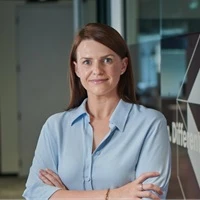
Stephanie Ledwidge
Associate Director, Project Controls, Linesight
Stephanie Ledwidge is an experienced project controls and cost management professional with expertise across the life sciences and pharmaceutical sectors. She currently serves as Associate Director, Project Controls at Linesight in Singapore. Her experience spans project controls, cost engineering, project coordination, and project delivery, with previous roles supporting organisations including CSL Behring, Mace, and Amgen.
At ISPE Singapore 2026, our Pharma Focus Asia team met with Stephanie Ledwidge, APAC Life Sciences Sector Lead at Linesight, to discuss the evolving landscape of pharmaceutical and biopharmaceutical capital projects across Asia-Pacific.
From modular construction and sustainability to supply chain resilience, cost benchmarking and early project involvement, Ledwidge shares her perspective on how pharma and biopharma companies can improve cost and schedule certainty while successfully delivering complex, high-stakes facilities.
Key Takeaways
• Modular construction and DFMA are becoming mainstream: Design for Manufacturing and Assembly (DFMA) and modular construction are increasingly being adopted to address labour shortages and improve schedule certainty, particularly in markets such as Singapore.
• Sustainability is becoming part of facility design: Sustainability is moving beyond ESG reporting and becoming increasingly embedded in the way pharmaceutical and biopharmaceutical facilities are designed, built and delivered.
• Supply chain resilience is influencing procurement strategies: Continued disruption and uncertainty are driving companies to consider reshoring, nearshoring and supply chain resilience earlier in the procurement and project planning process.
• Early engagement can improve project outcomes: Pharma projects involve GMP requirements, long-lead equipment, specialist contractors and complex technical requirements. Ledwidge highlights the importance of involving cost, project and risk management expertise from the feasibility stage rather than waiting until problems emerge.
• Benchmarking can strengthen capital decisions: Access to reliable project data can help companies make more informed decisions around cost and delivery timelines. Linesight’s global life sciences benchmarking database covers approximately 235 projects, providing visibility into comparable project costs and schedules.
• APAC requires a market-specific approach: Singapore, India, Malaysia and other APAC markets differ significantly in regulatory environments, contractor ecosystems, labour availability and equipment lead times. Local market knowledge therefore plays an important role in project planning and execution.
• The first stages of a project can shape the eventual outcome: Ledwidge emphasises that decisions made during the early stages of a project can have a significant impact on its overall cost, schedule and delivery. Bringing commercial and risk expertise to the table early can help preserve opportunities to course-correct.
• Agility is becoming increasingly important alongside compliance: Reflecting on ISPE Singapore 2026 and its theme of “smart and future-ready pharma,” Ledwidge highlights the growing importance of flexible infrastructure, digital capabilities and strategic partnerships that enable companies to respond more quickly to changing market demand.
The Bigger Picture
As pharmaceutical and biopharmaceutical companies across APAC continue to invest in new and expanded facilities, capital projects are becoming increasingly complex. Labour constraints, supply chain uncertainty, sustainability requirements, regulatory considerations and the need for greater schedule certainty are all influencing how facilities are planned and delivered.
Early involvement of cost, project controls and risk management expertise, combined with robust benchmarking and local market knowledge, can help companies make better-informed decisions throughout the project lifecycle. At the same time, modular construction, digital capabilities and flexible infrastructure are creating opportunities to build facilities that can respond more effectively to changing market requirements.
Watch the full conversation with Stephanie Ledwidge to explore the trends, challenges and strategies shaping pharmaceutical and biopharmaceutical capital projects across APAC.
Discover more insights and solutions from Linesight.