1. Given your extensive experience in the life sciences industry, what do you perceive as perceive the global growth trajectory of biosimilars and biologics, and what factors contribute to their increasing prominence?
The global growth trajectory of biosimilars and biologics is set to continue expanding. Biologic drugs have changed the treatment landscape for various diseases, such as cancer, autoimmune disorders, and chronic conditions. Their efficacy and specificity make them highly sought after. As the demand for biologics continues to rise, biosimilars offer an opportunity to increase patient access to these life-changing therapies.
Several factors drive their increasing prominence, including patent expirations, supportive healthcare policies, regulatory frameworks, and manufacturing advancements.
Firstly, many biologic drugs have reached or are approaching the expiration of their patents in several years. This opens up opportunities for the development and commercialization of biosimilars, which are highly similar versions of the original biologic drugs. As patents expire, biosimilar manufacturers can compete and drive growth.
Secondly, many countries and healthcare systems globally are implementing policies and initiatives to promote the use of biosimilars as they offer cost savings compared to their reference biologic counterparts. These policies include incentives for healthcare providers, reimbursement adjustments, and educational campaigns aimed at raising awareness about biosimilars. Such supportive policies contribute to the increasing prominence of biosimilars globally.
Thirdly, regulatory agencies around the world have established robust frameworks for the approval and commercialization of biosimilars. These frameworks provide clear guidelines and pathways for biosimilar development, ensuring efficacy and quality standards. The establishment of these regulatory frameworks has instilled confidence in biosimilars, encouraging their adoption and growth.
Lastly, advances in bioprocessing and manufacturing technologies have made the production of biosimilars more efficient and cost-effective. Improved manufacturing processes, analytics, and quality control measures have enhanced the ability to develop high-quality biosimilars, further fueling their growth.
Now, what does this mean for India? Research by Tuffs highlights that India currently contributes 3-4% of the world's biosimilars output today. According to Cytiva’s 2023 Global Biopharma Resilience Index, 65% of biopharma executives in India say that the domestic manufacturing of biologics is set to significantly increase until 2026. This is 15% higher than the global average, and resonates with India’s National Biopharma Mission to make India a global biomanufacturing hub.
At Cytiva, we’re excited that India will be able to capture the growth, building on its established reputation as the world’s largest producer of generic drugs. India can replicate its success in pharmaceutical generics and harness a combination of regulatory enhancements, therapeutic innovation, and robust R&D initiatives to seize the opportunity in biologics and biosimilars.
2. Could you discuss the strategic initiatives that Cytiva is undertaking to support the development and commercialisation of biosimilars and biologics on a global scale? Please provide specific examples or case studies related to these initiatives.
At Cytiva, we support our customers at every stage of biomanufacturing from discovery to delivery. In region for region manufacturing has been, and will continue to be, Cytiva’s strategy globally, and in India, in line with the post-COVID shift towards onshoring production.
To support this, we focus on our strengths in fostering collaborations, as well as offering advanced bioprocessing solutions, process development, trainings, regulatory support, and a global network of expertise.
First of all, Cytiva collaborates with academic institutions to support the development of biosimilars and biologics and empower growth within the biotech ecosystem. These collaborations often involve knowledge sharing, technology transfer, and joint research projects to accelerate the development process.
Here in India, we have meaningful collaborations with incubation centers supported by Biotechnology Industry Research Assistance Council (BIRAC) and Department of Biotechnology (DBT), and we’re active supporters and mentors for the next wave of biotech innovators. Our collaboration with translation centers like C-CAMP (Centre for Cellular and Molecular Platforms) exemplifies our dedication to guiding new startups. By offering mentorship and support, we help emerging companies solidify their footing in the biotech world.
Furthermore, as an active member of the Life Sciences Council of the Confederation of Indian Industry (CII), we contribute to skill development discussions, most recently engaging with DBT to highlight the significant strides being made by the government in this area.
Secondly, since integrating with Pall Life Sciences in 2023, Cytiva has the depth and breadth of experience globally, and advanced bioprocessing solutions, to enhance the efficiency and productivity of biologics manufacturing. These solutions include innovative bioreactors, chromatography systems, filtration technologies, and purification resins, which enable streamlined production processes and improved product quality.
We also have the expertise in process development and optimization for biosimilar and biologic manufacturing, available through our six Fast Trak™ Centers globally. By leveraging our vast experience in bioprocessing, we support our customers in refining their manufacturing processes, optimizing yields, and ensuring compliance with regulatory requirements. Our Fast Trak ™ Center in Bangalore, India, represents one of the three centers in Asia Pacific.
Thirdly, Cytiva provides onsite and virtual training programs and workshops to support the knowledge and skills development of talent working in the biosimilars and biologics space. These educational initiatives aim to enhance the understanding of bioprocessing techniques, quality control, and regulatory compliance, ultimately facilitating the successful development and commercialization of these products.
Fourthly, we understand that navigating the regulatory landscape can be challenging. By providing guidance and support in meeting regulatory requirements, ensuring compliance, and addressing any challenges that may arise during the approval process, Cytiva’s Fast Trak ™ validation services helps customers mitigate risks and accelerate time to market. Process and product specific validation of sterile filters and single use-components are handled in the lab in Bangalore, India.
In addition, as a global company with nearly 15,000 associates in 40 countries and more than 300 years’ heritage of expertise, Cytiva is better positioned to help customers solve biotechnology challenges in an era of emerging modalities. We now have the scale, talent, and incredible footprint to help our customers advance therapeutics for the benefit of patients around the world. In India alone, we have 50 field service and service sales associates to support our customers.
3. What are some specific market dynamics that have a significant impact on Cytiva's strategies in the biosimilars and biologics space? How have these dynamics influenced your approach?
At Cytiva, we aim to respond to the needs of our customers and the industry. As mentioned earlier, a few factors can have a significant impact on companies in this industry.
Firstly, the regulatory landscape in the biosimilars and biologics space is complex and can vary across different regions. Cytiva's strategies take into account the regulatory requirements for product development, approval processes, and access which our customers face. Adapting to and complying with these regulations is crucial for success.
Secondly, patents and intellectual property rights play a significant role in the biosimilars and biologics sector. We observe developments in existing patents for reference biologics, which can impact the industry’s ability to develop biosimilar products.
Thirdly, pricing and reimbursement policies set by healthcare systems and insurance providers can significantly impact the commercial viability and access of biosimilars and biologics. Manufacturers need to consider factors such as cost-effectiveness, and reimbursement negotiations to ensure acceptance and viability.
Hence, our approach to these dynamics is to play a bigger role in India’s “Make in India” vision and align with the Department of Biotechnology’s strategies. That means focusing on our long-term strategy of regional manufacturing.
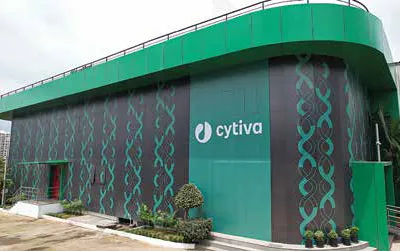
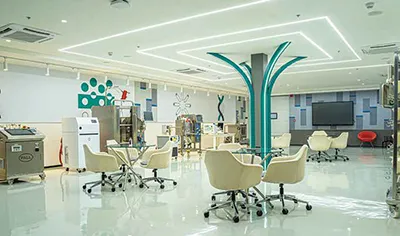
In October last year, we inaugurated our manufacturing facility and customer experience centre in Pune in anticipation of the growth in demand for biosimilars and biologics manufacturing from our customers.
Before we added these capabilities, Cytiva already has established a strong presence in India with facilities in Mumbai, Delhi, Ahmedabad, Hyderabad, Chennai, Bangalore, and Kolkata.
Our Bangalore site includes a Fast Trak Center that offers training as well as validation and bioprocessing services, and a well-established center for research and development across bioprocess, discovery, medical, and genomic medicine businesses.
Blurb: At Cytiva, we’re excited that India will be able to capture the growth, building on its established reputation as the world’s largest producer of generic drugs.
4. Can you elaborate on the regulatory challenges and opportunities faced by the industry in navigating the global landscape for biosimilars and biologics, particularly in different regions? How does Cytiva adapt its strategies to address these challenges effectively?
In my view, the industry can reframe challenges in navigating regional regulatory challenges as opportunities.
For example, the regulatory approval process for biosimilars and biologics can be complex and time-consuming. Companies seeking to produce biosimilars need to navigate through stringent regulatory requirements, including demonstrating similarity to reference biologics, conducting comprehensive analytical and clinical studies, and addressing regulatory concerns.
Secondly, regulatory frameworks for biosimilars and biologics can vary across different regions. Companies producing biosimilars need to adapt their strategies to comply with and meet the specific regulatory requirements of each country. This can involve additional resources, costs, and complexities in gaining regulatory approvals in different countries.
By staying informed about the latest regulatory developments, Cytiva can help customers adapt their strategies accordingly to navigate the global landscape for biosimilars and biologics successfully.
5. In the competitive landscape of the global biopharma industry, how does Cytiva utilise advancements in bioprocessing, discovery, medical, and genomic medicine to pioneer innovation and carve out a distinctive position in the market?
The biopharma industry is in constant movement and needs a strong collaborator that is capable of creating and innovating the tools needed to advance the next generation of medicines. Following our integration with Pall Life Sciences, we now have the scale to do this at every phase – from discovery to delivery. Our portfolio now includes product brands such as Allegro, Supor, iCELLis, Kleenpak, and Pegasus, in addition toÄKTA, Amersham, Biacore, FlexFactory, HyClone, MabSelect, Sefia, Whatman, Xcellerex, and Xuri.
Recently, we launched innovative solutions like Supor Prime sterilizing grade filters to address the needs of customers manufacturing high-concentration biologic drugs, Xcellerex magnetic mixer to address challenges faced by customers engaged in large-scale mAb, vaccine, and genomic medicine manufacturing processes, and Sefia cell therapy manufacturing platform to increase efficiencies and accelerate speed to clinical milestones, among others. All solutions are aimed at solving our customers’ distinct needs.
We’ll continue being that strong partner to our customers by focusing on innovation and digitalization, especially in data management. I’m excited about the adoption of digital solutions for our customers to enable flexible, reliable bioprocess development. Through the Bioreactor Scaler tool, our customers can get their cell culture process right the first time for optimal predictions. Through GoSilicoTM process development and intensification, they can speed up high performance and flexible processes.
There’s also so much potential around data sharing. We’re exploring how we can help customers save time, money, and increase output by understanding what happened in every stage of a process.
6. How does Cytiva utilise academic, industry, and technology partnerships to advance transformative technologies for global biopharmaceutical research, manufacturing, and diagnostics? Could you highlight successful collaborations that have bolstered Cytiva's role in the biopharma ecosystem and spurred innovation?
As mentioned earlier, Cytiva collaborates with academic institutions to support the development of biosimilars and biologics and empower growth within the biotech ecosystem. These collaborations often involve knowledge sharing, technology transfer, and joint research projects to accelerate the development process.
Here in India, we have meaningful collaborations with incubation centers supported by Biotechnology Industry Research Assistance Council (BIRAC) and Department of Biotechnology (DBT), and we’re active supporters and mentors for the next wave of biotech innovators.
Our collaboration with translation centers like C-CAMP (Centre for Cellular and Molecular Platforms) exemplifies our dedication to guiding new startups. By offering mentorship and support, we help emerging companies solidify their footing in the biotech world.
Furthermore, as an active member of the Life Sciences Council of the Confederation of Indian Industry (CII), we contribute to skills development discussions, most recently engaging with DBT to highlight the significant strides being made by the government in this area.
Looking ahead, we’re excited to deepen our collaborations with academic institutions and industry bodies in India, aiming to advance the skills of R&D talent in the biotech sector. By sharing our knowledge on the latest bioprocessing techniques, we’re not just anticipating the future; we’re helping to create it.
7. What is Cytiva doing to adapt to shifting customer demands in the dynamic global biopharma sector, particularly in light of industry changes? Could you discuss specific strategies or initiatives Cytiva has implemented in response to customer feedback and market trends?
It’s an exciting time to work in the biopharma industry, with the growth of genomic medicine especially in RNA technologies and cell and gene therapies globally and in Asia Pacific. We understand that startups, and R&D institutions compared to big biopharma companies in Asia Pacific, are struggling to compete for mature talent, and to train fresh hands.
As a Danaher OpCo, we adopt the mindset of Customer Talk, We Listen. To meet their demands in talent training, we’ll continue to provide Fast Trak Education and Training Program at three centers based in Asia Pacific namely India, South Korea, and China.
Fostering strong collaborations between academia and the industry can be transformative. By looking at global success stories, like Sweden's Testa Centre which offers an open door to innovators for accessing complete lab setups, we can envision a similar pathway for India. Such collaborative environments could address the current gaps in academia-industry interactions and the challenges of scaling up, paving the way for a thriving ecosystem that supports innovative breakthroughs.
Blurb: Looking ahead, we’re excited to deepen our collaborations with academic institutions and industry bodies in India. By sharing our knowledge on the latest bioprocessing techniques, we’re not just anticipating the future; we’re helping to create it.
8. How does Cytiva incorporate sustainability into its biopharmaceutical manufacturing processes, given the industry's growing focus on eco-friendly practices? Can you outline specific initiatives aimed at reducing environmental impact and promoting sustainability?
Sustainability is a key priority for Cytiva and we’re excited to see that this has emerged as a focus area for India’s biopharma industry in this year’s budget announcement. During her 2024-2025 Budget address, Finance Minister of India Nirmala Sitharaman discussed the introduction of a fresh initiative focused on bio-manufacturing and bio-foundry. This initiative aims to offer eco-friendly substitutes like biodegradable polymers, bio-plastics, bio-pharmaceuticals, and bio-agricultural inputs. The announcement aims to boost the bio-economy's contribution to India's economy, reaching $300 billion by 2030 and $1 trillion by 2047. Bio-products are vital for India's sustainability and green economy goals.
At Cytiva, “designing in sustainability’ is our plan to make a tangible impact on people, and the planet, and to build the foundation for a resilient company. We have ambitions to 2030 and targets that we’re working to achieve by 2025.
Our six focus areas are: reducing carbon footprint, using water responsibly, evolving our use of plastics, rethinking packaging, driving community impact, and increasing diversity and inclusion. As you can see, four focus on making a positive impact on our environment and our 2025 goals include
• Zero polystyrene, replaced with reusable solutions or that are widely acceptable for recycling.
• 35% Reduction in absolute CO2e emissions in operations.
• 100% of sites powered exclusively by renewable electricity.
• 100% of district steam, heating, and cooling generated by renewable sources.
I’m happy to also share that our latest manufacturing facility in Pune uses GreenPro-certified insulation, cement, plywood, and steel along with water efficient fixtures that reduce water demand by 46%. Additionally, 100% of the effluent water from the facility is treated and reused for gardening, and 95% of the facility’s footprint will be air-conditioned, with a BEE5 star rating to improve energy efficiency.
Most recently, we launched a fruit seed collection drive at our manufacturing facility in Pune, to commemorate World Environment Day 2024. Our associates brought in over 450 fruit seeds that have been washed and dried. These seeds were then handed over to an organisation called Forrest (Forest Regeneration and Environmental Sustainability Trust), where they will be sown before being moved to appropriate locations as soon as they reach the seedling stage. This is just one of the many examples of initiatives that we participate in for the good of People and Planet.
9. What are your predictions for the future of the global biopharma sector, specifically concerning the adoption and impact of biosimilars and biologics? What challenges lie ahead, and how does Cytiva plan to sustain its leadership amidst these advancements?
We anticipate the adoption of biosimilars to grow in light of the supportive policies by many countries and healthcare systems globally, regulatory frameworks, manufacturing advancements. as well as cost savings compared to their reference biologic counterparts.
As mentioned earlier, by keeping abreast with the latest regulatory developments, Cytiva can help customers adapt their strategies accordingly to navigate the global landscape for biosimilars and biologics successfully.