Asia Pacific (APAC) is rapidly emerging as a global hub for biologics. South Korea, India, Singapore, and Thailand are investing heavily in research, infrastructure, and advanced production capabilities.
In particular, South Korea has set ambitious targets to become one of the world’s top six biopharma powerhouses by 2027, with a plan that includes developing new blockbuster drugs, doubling pharmaceutical exports to US$16 billion, and establishing three global top 50 pharmaceutical companies1. It is already amongst the top nations worldwide for biologic clinical trials, while Singapore, Malaysia, and Vietnam are also quickly establishing themselves as important players in the space – efforts have helped grow regional healthcare spend on biologics to between 10-15%2 annually.
This growing regional strength comes at a critical time. APAC’s pharmaceutical sector is facing unprecedented pressures: a growing healthcare burden marked by the rising prevalence of cancer, endemic infectious diseases, and the acceleration in biologics and vaccine production to cater to unmet therapeutic needs.
In oncology alone, the region - home to 60% of the world’s population - accounted for nearly half3 of all new cancer diagnoses worldwide in 2020. Demand for innovative and breakthrough oncological therapies and vaccines is climbing rapidly, fueled not only by population growth, but also by heightened public awareness and persistent threats from endemic diseases such as COVID19 and seasonal influenza.
Following Covid-19, we are seeing regions around the world, including APAC, bolster their vaccine manufacturing capacity. This move highlights the drive to safeguard against future health crises by strengthening local resilience and reducing reliance on global supply chains.
Intensifying this challenge is the wave of impending patent expirations for blockbuster drugs over the next five years. Between 2024 and 2028, the world’s top 20 biopharma companies will face more than US$180 billion in at-risk sales4. Many of the largest drugs approaching expiry are biologics – an opportunity that, while opening the door for the development of biosimilars, will take time to translate into affordable and widely available alternatives.
Taken together, these trends point to an inflection point for Asia’s life sciences ecosystem and underscores the need to think holistically about how development, manufacturing, and drug delivery systems can be scaled safely, efficiently, and sustainably.
Navigating the journey: the role of prefillable syringes
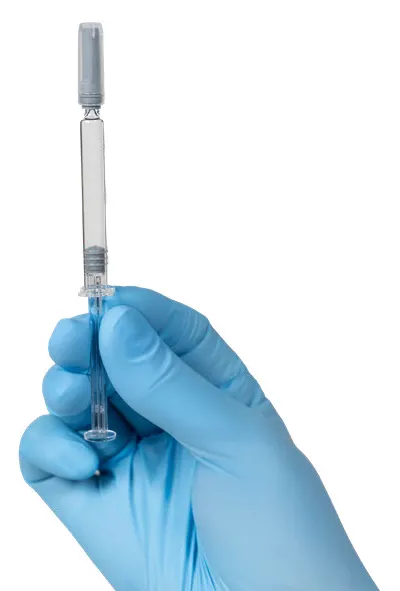
For emerging biotech and pharma firms with a clinical pipeline – from pre-clinical to Phase II trials – and Contract Development and Manufacturing Organizations (CDMO), prefillable syringes represent a critical link from drug discovery to patient delivery.
One of the most critical – and often underestimated – decisions lies in the choice of prefillable syringes. Though small in size, these delivery systems play an outsized role in enabling the safe administration of sensitive biologics and vaccines. But because they are regulated as combination products, companies often have to navigate a complex maze of design, regulatory, and supply chain challenges, which can result in prolonged delivery to market.
Designing a delivery system that fits the molecule
Requirements for combination products are intricate. From design and part selection through to development, verification, and manufacturing, manufacturers must carefully balance drug stability, safety, usability and device functionality.
Each component of a prefillable syringe – glass barrel, plunger, needle shield, and others – often come from different suppliers with testing performed independently on drug-free samples. This puts the onus on drug manufacturers to manually verify that all relevant tests have been accounted for, reconcile differing results, and piece together a complete picture of the system’s performance. Knitting together these fragmented component-level data sets is not only challenging and time-consuming, but it also introduces uncertainty, adds time, and increases the risk of costly errors. All of this translates to slowing progress to clinical fill, and consuming significant time and resources that could otherwise be focused on advancing the drug itself.
Navigating a complex regulatory process
But finalising the design is only half the battle. Once the device is defined, drug developers face the equally complex task of navigating the regulatory process – a stage where fragmented data and multiple stakeholders create even greater challenges.
Because a prefillable syringe is assembled from multiple components supplied by different vendors, regulatory approval can quickly become cumbersome. Each supplier reports quality attributes differently – using different measurements, specifications, or reporting units and formats. The responsibility then falls on the drug manufacturer to reconcile these disparate data sets, understand how they interact, and build a unified evaluation of the complete system.
Take, for example, the rigid needle shield (RNS), which is supplied with detailed product specifications across a variety of characteristics, including pull-off force, endotoxin level, bioburden level, and particulate matter. For the needle shield, particulate matter is uniquely reported according to an individual value. Meanwhile, the glass barrel supplier reports particle data as a specific percentage based on United States Pharmacopeia–National Formulary (USP-NF) <788>, and the plunger supplier reports particulate matter per square centimetre of plunger surface. Reconciling these different measurements – so the manufacturer can accurately evaluate the system as a whole – is complex, time-consuming, and critical to ensure safety and regulatory compliance.
Record-keeping and data management add an additional layer of complexity. Companies are not only required to evaluate distinct device constituent part-level datasets in isolation, but as a combination product, they must also ensure the performance of the prefillable syringe as a complete system. Ultimately, all these disparate datasets must be compiled into a unified and robust Design and Development (D&D) File as part of the regulatory submission, typically within an Electronic Common Technical Document (eCTD).
Avoiding setbacks in the supply chain
Once design and regulatory hurdles are addressed, supply chain realities introduce another layer of complexity. Suppliers often impose large minimum order quantities, which can tie up capital and result in excess or expired components. Lead times vary across vendors, and mismatched delivery schedules make forecasting difficult. Companies must also coordinate multiple suppliers, manage incoming inspections, and verify system-level functionality – all with multiple points of contact.
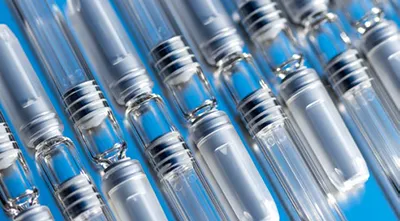
For smaller pharma companies, these challenges are particularly acute. Limited operational capacity makes it difficult to respond to volatile market demands, manage inventory efficiently, and maintain consistent product quality. The fragmented approach further complicates post-market monitoring, making it harder to trace and resolve quality issues.
Ultimately, these supply chain challenges can slow development, increase costs, and jeopardize time-to-market. And this is just for the prefillable syringe. Every other component of the finished combination product requires considerations that can impact product quality and regulatory compliance – highlighting the urgent need for a more coordinated, reliable, and efficient approach to delivering prefillable syringe systems.
A path forward: Integrated system solutions
For APAC’s biotech and pharma companies and their CDMO partners, these challenges are just a small part of what must be navigated on the journey from molecule to market.
To realise the region’s ambition as a hub for biologics and vaccine development, innovators need dependable, system-level drug delivery solutions that accelerate development, ensure regulatory compliance, and support scalable, high-quality manufacturing. However, for years, this fragile dynamic has been the status quo in the sourcing of prefillable syringes, driven by a component-based approach to device selection and evidencing system-level performance. But it begs the question: isn’t there a better way to simplify this complex process and help drug companies bring life-saving therapies and vaccines to patients faster?
This is where an innovative, integrated prefillable syringe system can make a real difference by helping developers reduce delays, contain escalating costs, and avoid regulatory setbacks.
Launching in 2026, the West Synchrony™ S1 prefillable syringe (PFS) system embodies this transformative approach. It will deliver a harmonised, fully verified system-level solution designed for biologics and vaccines. By consolidating drug-independent testing, design, and accountability, it enables emerging biotechs, established pharma companies, and CDMOs alike to move faster through design, streamline regulatory submissions, and maintain a dependable supply chain that meets both quality and volume demands.
The West Synchrony™ S1 PFS system reflects over a century of expertise in injectable drug delivery. By supporting biotechs, established pharma companies and CDMOs, West is equipping APAC innovators to accelerate product development, strengthen operational resilience, and ultimately expand access to life-saving biologics and vaccines for patients across the region.
Disclaimer
West and the diamond logo and Synchrony are trademarks or registered trademarks of West Pharmaceutical Services, Inc.
Footnotes:
1. South Korea: a new global hub for biopharma
2. Logipharma Asia: Global Supply Chain Advisors
3. Cancer Incidence and Mortality in Asian Countries: A Trend Analysis
4. EY | How life sciences can make the right deals in a time of change