3D Printing
Redefining Clinical Manufacturing in the Pharmaceutical Industry
Stéphane Roulon, PhD, CEO, MB Therapeutics.
Abstract: This article explores how pharmaceutical 3D printing is transforming clinical development by enabling precise, on-demand manufacturing of drug products. It highlights reduced material waste, faster formulation optimisation, minimised redevelopment cycles, and decentralised production near clinical sites, ultimately improving efficiency, flexibility, and sustainability in clinical trials.
Introduction
The pharmaceutical industry is undergoing a profound transformation, driven by advanced manufacturing technologies that challenge conventional models of drug development, clinical supply, and production. Among these innovations, three-dimensional (3D) printing, and more specifically semi-solid extrusion (SSE) printing, is emerging as a highly promising approach for the manufacture of clinical batches.
Unlike traditional large-scale manufacturing, which is optimised for mass production and standardisation, SSE-based 3D printing enables flexible, small-scale, and patient-centred production. This approach is particularly relevant in the context of clinical trials, where demand is uncertain, formulations evolve rapidly, and regulatory requirements are increasingly stringent.
One of the most significant inefficiencies in current clinical supply chains is the excessive production of investigational medicinal products (IMPs). It is widely estimated that nearly 50 per cent of IMPs are destroyed before administration, due to protocol amendments, recruitment delays, expiry, overproduction, or early study termination. This represents a major financial, environmental, and ethical challenge for the pharmaceutical industry.
In this context, semi-solid extrusion 3D printing offers a pragmatic and industrially relevant solution. By enabling on-demand, GMP-compliant, and decentralised production, it has the potential to radically reduce waste and redefine how clinical batches are designed, manufactured, and delivered.
Principles of Semi-Solid Extrusion 3D Printing in Pharmaceuticals
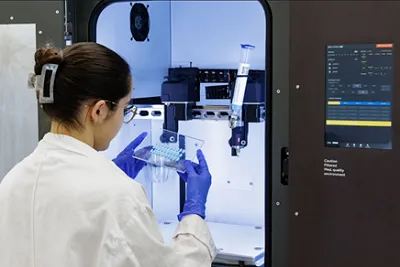
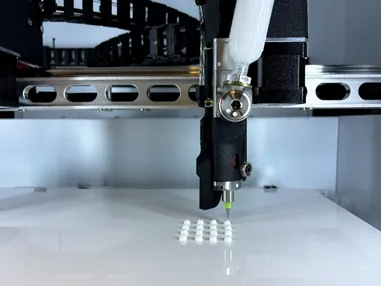
Semi-solid extrusion is a material deposition technology in which pastes, gels, or viscous formulations are extruded through a nozzle and deposited layer by layer according to a digital design. Unlike filament-based or powder-based techniques, SSE operates at low temperatures and moderate mechanical stress, making it particularly suitable for pharmaceutical applications.
In SSE printing, drug substances and excipients are formulated into printable inks with controlled rheological properties. These formulations may include hydrogels, lipid-based systems, polymer dispersions, or semi-molten matrices. Once deposited, the printed structures are stabilised through drying, cross-linking, cooling, or solvent evaporation.
Key advantages of SSE for pharmaceutical manufacturing include:
- Compatibility with heat-sensitive APIs
- High drug-loading capacity
- Flexibility in excipient selection
- Mild processing conditions
- Compatibility with aqueous systems
These characteristics make SSE particularly attractive for clinical-stage products, where formulation stability and versatility are critical.
Limitations of Conventional Clinical Batch Manufacturing
Systematic Overproduction of IMPs
Traditional clinical manufacturing relies on forecast-driven batch production. Sponsors typically manufacture large quantities of IMPs in advance to secure supply continuity. However, clinical development is inherently uncertain, and such forecasts rarely reflect real-world dynamics.
Protocol amendments, patient dropouts, dose-escalation decisions, and regulatory delays frequently lead to excess inventory. As a result, up to half of all IMPs produced are never administered and must be destroyed under controlled conditions.
This waste has multiple consequences:
- Increased development costs
- Higher environmental footprint
- Inefficient use of APIs
- Additional regulatory burden
- Ethical concerns regarding resource use
Operational Inflexibility
Conventional manufacturing facilities are designed for large, standardised batches. Any modification in formulation, dosage, or packaging typically requires revalidation, new stability studies, and additional regulatory submissions. This rigidity limits the ability to adapt rapidly during clinical development.
SSE 3D Printing as an Enabler of On-Demand Clinical Production
Just-in-Time Manufacturing for Clinical Trials
Semi-solid extrusion enables the production of small batches precisely aligned with clinical demand. Instead of manufacturing large safety stocks, sponsors can produce IMPs in response to real-time enrolment and dosing data.
This just-in-time model offers several benefits:
- Reduction of excess inventory
- Lower storage requirements
- Decreased risk of expiry
- Improved supply reliability
- Faster response to protocol changes
Pilot programmes have demonstrated that SSE-based production can reduce IMP waste by 30 to 60 per cent, depending on trial design and organisational maturity.
Decentralised and Hospital-Based Manufacturing
SSE printers can be installed in controlled pharmaceutical environments within hospitals or specialised clinical centres. This enables local manufacturing under GMP supervision, reducing dependency on centralised facilities.
Such decentralised models are particularly relevant for early-phase trials, rare diseases, and personalised therapies. They also improve supply chain resilience in the face of geopolitical, logistical, or public health disruptions.
Personalisation and Adaptive Trial Designs
Individualised Dosage Forms
SSE 3D printing allows precise adjustment of dose, geometry, and release profile at the individual patient level. Dosage forms can be adapted according to body weight, metabolic profile, genetic markers, or clinical response.
This capability is highly valuable in oncology, paediatrics, and orphan drug development, where interpatient variability is significant.
Support for Adaptive Protocols
Modern clinical trials increasingly rely on adaptive designs, in which dosing regimens and treatment arms evolve based on interim analyses. SSE enables rapid reformulation and batch adjustment without major industrial disruption.
Regulatory and GMP Considerations
Process Validation and Control
For SSE-based manufacturing to be accepted by regulatory authorities, robust process validation is essential. Critical process parameters include:
- Ink rheology
- Extrusion pressure
- Nozzle diameter
- Printing speed
- Drying conditions
- Environmental controls
These parameters must be defined, monitored, and documented within a pharmaceutical quality system.
Digital Traceability and Data Integrity
SSE manufacturing is inherently data-driven. Each batch is defined by digital design files and printing parameters. Integration with electronic batch records and quality management systems is therefore essential to ensure compliance with data integrity requirements.
Qualification of Materials and Formulations
Printable semi-solid formulations must demonstrate long-term stability, chemical compatibility, and microbiological safety. Excipients must comply with pharmacopeial standards, and APIs must remain stable throughout the printing and post-processing steps.
Considerable research is currently focused on developing standardised printable formulations compatible with GMP production.
Environmental and Sustainability Impact
By reducing overproduction and inventory destruction, SSE 3D printing contributes directly to more sustainable pharmaceutical development. Benefits include:
- Lower API consumption
- Reduced waste incineration
- Fewer international shipments
- Decreased packaging volume
- Optimised resource utilisation
As sustainability becomes a strategic priority for the industry, these advantages strengthen the case for additive manufacturing.
Integration with Artificial Intelligence and Digital Platforms
Artificial intelligence increasingly supports SSE manufacturing through formulation optimisation, process monitoring, and predictive quality control. Machine-learning algorithms can analyse large datasets to identify optimal printing parameters and anticipate deviations.
The convergence of AI, digital twins, and additive manufacturing will further enhance process robustness and scalability.
Future Perspectives for Semi-Solid Extrusion in Clinical Manufacturing
Over the next decade, several developments are expected:
- Standardisation of SSE platforms
- Harmonisation of regulatory frameworks
- Expansion of decentralised manufacturing networks
- Integration with clinical trial management systems
- Increased automation of formulation and printing
These advances will accelerate the adoption of SSE as a mainstream clinical manufacturing technology.

Conclusion
Semi-solid extrusion 3D printing represents a major opportunity to modernise clinical batch production. By enabling flexible, on-demand, and personalised manufacturing, it addresses one of the most pressing inefficiencies of pharmaceutical development: the destruction of nearly half of all investigational medicines.
Industry analyses estimate that global clinical trial supply chains generate more than USD 5–7 billion in annual waste, largely due to unused IMPs, expired batches, and excessive logistics costs. Large Phase III trials may individually destroy between 20 and 40 per cent of manufactured material, corresponding to several million dollars per programme.
Pilot industrial deployments of SSE platforms have demonstrated concrete operational benefits. Sponsors implementing on-demand production have reported inventory reductions of 35–60 per cent, storage cost reductions of up to 45 per cent, and lead-time reductions from 12–16 weeks to less than 2 weeks for reformulated batches.
Through reduced waste, enhanced adaptability, and improved patient centricity, SSE-based manufacturing supports more sustainable and efficient clinical research. However, its full potential depends on continued regulatory alignment, technological maturation, and workforce training.
References
- Trenfield S.J. et al., 3D Printing Pharmaceuticals: Drug Development to Frontline Care, Advanced Drug Delivery Reviews.
- Norman J. et al., A New Chapter in Pharmaceutical Manufacturing, Advanced Drug Delivery Reviews.
- European Medicines Agency, Guideline on the Requirements for Quality Documentation Concerning Investigational Medicinal Products.
- U.S. Food and Drug Administration, Technical Considerations for Additive Manufactured Medical Products.
- Goyanes A. et al., Semi-Solid Extrusion 3D Printing in Drug Delivery, Journal of Co
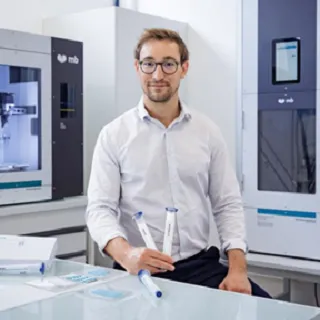
Stéphane Roulon is a pharmaceutical entrepreneur with over ten years of experience in developing 3D printing technologies for drug manufacturing. He is the CEO of MB Therapeutics, a pharmaceutical establishment specializing in personalized medicines produced using advanced 3D printing solutions to support the future of precision medicine.