The New Pharmacovigilance Era
Technology, precision, and patient-centric safety
Aarti Chitale, Principal, Healthcare & Lifesciences Growth Opportunity Analytics, Frost & Sullivan
The global pharma industry is building integrated partner ecosystems using technology, data, and regulatory standards to streamline clinical trials and reduce site burden, especially in adverse‑event tracking. Rising AE volumes and digital tools are driving strong growth, with PV services projected to exceed US$12B by 2030, increasingly outsourced to CROs, specialized vendors, and major tech firms.
When purchasing a new kitchen appliance or trying a new skincare product, most of us instinctively take small safety steps - checking reviews, looking for quality certifications, or doing a quick patch test. These everyday habits reflect a simple principle: we rarely trust something new without validating its safety. Pharmacovigilance and Safety Testing operate on that same principle but at a far larger, more complex, and scientifically rigorous scale, working to protect millions of patients by ensuring that the medicines they rely on, remain safe throughout their use.
As global clinical research accelerates with over 900,0001 interventional clinical trials registered worldwide, according to the World Health Organization (WHO), the importance of structured safety oversight has never been greater. Adverse event management, case processing, regulatory strategy, and risk mitigation have evolved into mission-critical pillars of successful clinical development. These functions ensure not only regulatory compliance but also the scientific integrity and ethical grounding of clinical trials across diverse populations and therapeutic areas.
Regulatory bodies define pharmacovigilance as the science of detecting, assessing, understanding, and preventing adverse drug effects to ensure that a medicine’s benefits consistently outweigh its risks throughout its lifecycle. Today, this field is undergoing rapid transformation. Industry convergence, coupled with the adoption of AI/ML, cloud‑based platforms, and multi‑omics data - particularly pharmacogenomics, enabling a new generation of sophisticated, predictive, and personalized safety systems. Together, these advances are reshaping how therapies are monitored, evaluated, and optimised across the global healthcare ecosystem.
The Evolution of Modern Drug Safety Surveillance
How does adverse event reporting improve clinical trial outcomes?
Historical drug safety failures, most notably the global withdrawal of Vioxx following evidence of elevated cardiovascular risk, have underscored the indispensable need for strong post‑marketing surveillance and rapid intervention. Pharmacovigilance exists precisely to uncover existing and emerging safety concerns by drawing insights from health records, patient experiences, and the judgement of healthcare professionals.
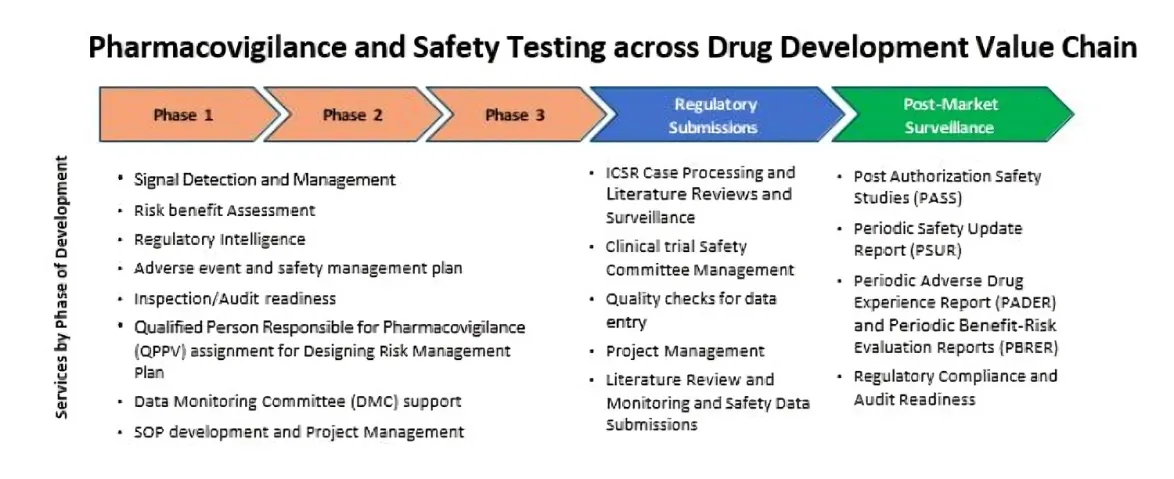
Modern PV systems have transformed this traditionally linear process into a coordinated, technology‑enabled ecosystem. Through structured steps - data collection, processing, signal detection, evaluation, and risk management, today’s systems integrate electronic health records, real‑world evidence, and active surveillance programs such as the FDA’s Sentinel Initiative to identify safety signals with far greater speed and reliability. Advanced reporting infrastructures2, including the European Medicines Agency’s EudraVigilance, the FDA’s Adverse Event Reporting System (FAERS), and the Vaccine Adverse Event Reporting System (VAERS), now enable high‑quality documentation, monitoring, and analysis of suspected adverse drug reactions across vast patient populations.
As medicine moves toward tailored therapies, adverse event reporting has become even more strategically important. It is emerging as the backbone of precision pharmacovigilance, where patient‑specific genetic, metabolic, and clinical data help predict and prevent adverse reactions with unprecedented accuracy. By integrating genomic insights with real‑world AE trends, PV systems can now support more individualised decision‑making ultimately improving safety outcomes for patients with complex, highly variable treatment responses.
The New Safety Ecosystem: Digital solutions rewriting Pharmacovigilance Rules
The Pharmacovigilance (PV) and Safety Testing landscape, once dominated almost entirely by CROs, is undergoing a profound transformation. A surge of specialized and pure play PV vendors is now complemented by technology providers, decentralised trial vendors and eClinical solution partners. What began as “software‑as‑a‑service” collaborations has matured into fully integrated business models, that expand the scope, speed, and sophistication of global safety operations.
With pharmaceutical pipelines growing in complexity and more than half of PV activities now outsourced, the industry is increasingly embracing AI‑enabled automation as a core operational engine. Tools built on natural language processing (NLPs), advanced data extraction, and predictive analytics are moving from experimental to mainstream, with experts forecasting a 20%–40% disruption in traditional workflows. These emerging solutions are already delivering tangible impact by accelerating signal detection, improving case processing accuracy, and enabling more personalized safety assessments at scale.
While mature markets have taken the lead by embedding AI‑driven surveillance into national systems, such as the FDA’s Sentinel program, emerging regions are building infrastructure through mobile‑based adverse drug reaction (ADR) reporting and modernised regulatory frameworks. In India, for example, the Central Drugs Standard Control Organization (CDSCO) and the Indian Pharmacopoeia Commission (IPC) under the PvPI have strengthened safety governance through the 2024 “Pharmacovigilance Guidance Document for Marketing Authorization Holders,” marking a major regulatory milestone.
From Lean Teams to Multi‑Vendor Synergy: New Operating Models in PV
What is driving market demand?
As the pharmacovigilance landscape evolves, small‑to‑mid‑sized and emerging biopharma companies are increasingly seeking PV services that are integrated, flexible, agile, and cost‑efficient and capable of scaling rapidly without the heavy infrastructure investments traditionally required. These companies often face fundamental challenges in data capture, case management, and compliance, making the adoption of electronic systems and automation not just advantageous, but essential for timely trial execution and product launch readiness.
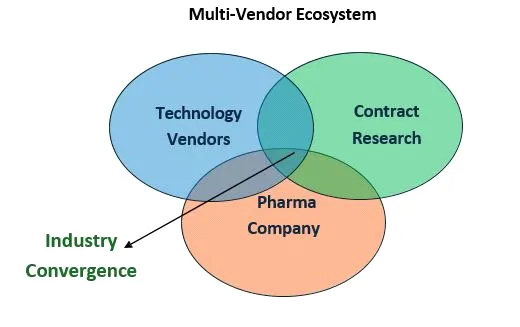
To address these needs, pharma companies have gravitated toward partnership models such as full‑time equivalent (FTE) and fee‑for‑service (FFS) frameworks. These models embed seamlessly within internal teams, offering lean operations, predictable costs, and consistent expertise. While an integrated single‑vendor approach reduces the operational risk associated with coordinating multiple service providers, a multi-vendor ecosystem on the other hand, offers several compelling advantages: bringing together a diverse range of capabilities, shortening training cycles, and enhancing response times for adverse event management and regulatory obligations.
As a result, demand for outsourced PV services continues to accelerate. Risk assessment, safety database management, and adverse event reporting remain among the most heavily outsourced yet capital‑intensive functions. It is no surprise, then, that over 45% of pharma sponsors (based on industry surveys) now work with two or more PV partners simultaneously, ensuring continuity, efficiency and on time study completion. Meanwhile, collaborations with technology vendors are fueling automation across the safety lifecycle, fostering a synergistic, multi‑vendor PV ecosystem that blends human expertise with digital efficiency. The result is a more resilient, responsive, and future‑ready PV operating model.
Precision Pharmacovigilance: The Next Frontier in Drug Safety
How is precision medicine reshaping new business models?
As the rise of personalized and precision therapies accelerates, the industry is shifting away from traditional population‑level safety models toward precision approaches that detect adverse events with far greater specificity. This evolution is paving the way for a new era - ‘Precision Pharmacovigilance’.
Precision pharmacovigilance marks a fundamental transformation from broad, retrospective surveillance to a forward‑looking, individualised model that integrates genomics, real‑world evidence, and artificial intelligence for personalized risk assessment. This emerging paradigm seamlessly connects pharmacogenomics, synthetic biology, and advanced analytics to tailor safety monitoring to each patient’s biological profile. Multidisciplinary frameworks strengthened by collaboration among CROs, diagnostics companies, and leading research institutions such as the NIH are accelerating the adoption of this model across clinical development.
A dynamic ecosystem of innovators is enabling this shift. Vendors like SOPHiA Genetics are advancing precision diagnostics that enhance PV in clinical research, while regulatory bodies—including the ICH, FDA, EMA, and IMDRF are aligning global standards to support unified surveillance, consistent reporting, and harmonised post‑market oversight. At the same time, specialized PV providers such as PrimeVigilance are creating tailored Pharmacovigilance Plans (PVPs) for advanced therapy medicinal products (ATMPs), incorporating long‑term follow‑up to ensure extended patient safety. CROs are also expanding capabilities through strategic partnerships. For example, Precision for Medicine’s collaboration with SOPHiA Genetics allows the integration of the SOPHiA DDM™ platform into precision clinical research workflows— solidifying the foundation for a future in which safety intelligence is as personalized as the therapies themselves.
What This Means for the Future of Drug Safety
As pharmacovigilance moves into an era defined by automation, collaboration, and precision science, the industry is poised for a fundamental leap forward. The convergence of technology, specialized expertise, and personalized safety intelligence is reshaping how risks are detected, assessed, and prevented. By embracing these advancements, pharma companies can build more proactive, resilient, and patient-centric safety systems, ultimately ensuring that therapeutic innovation is matched with equally innovative drug safety stewardship.
Conclusion
With pharmaceutical R&D focusing on increasingly complex and personalized therapies, the role of pharmacovigilance has never been more critical. The future of drug safety and successful patient outcomes lies in proactive, intelligent, and patient-centric systems where every adverse event is monitored, processed and utilised as an opportunity to learn, adapt, and improve. By integrating advanced technologies such as AI/ML, RWE, digital twins, alongside precision approaches, the industry is not only safeguarding patients but also enabling innovation to thrive responsibly. Embracing this new paradigm will be the ultimate drug safety panacea, ensuring that life-saving therapies remain both effective and safe for the individuals who rely on them.
Footnotes:
- https://www.medrxiv.org/content/10.1101/2024.11.22.24317736v1
- https://www.news-medical.net/life-sciences/Why-Pharmacovigilance-Is-More-Critical-Than-Ever.aspx

With over 15 years of experience, Aarti brings deep expertise across pharmaceutical contract research services and technology‑enabled drug discovery and development. She leads the Contract Research Services program, covering peripheral and ancillary service segments such as tech vendors, eClinical solution providers, central labs, and related ecosystems. Her strengths span market intelligence, forecasting, competitive benchmarking, and strategic opportunity assessment as well as growth advisory services, that consistently support executive decision‑making for global clients. She is regarded as a trusted growth expert, and is adept in supporting stakeholders navigate industry disruption, accelerate innovation, and seize transformative opportunities across the rapidly evolving Contract Services Landscape.