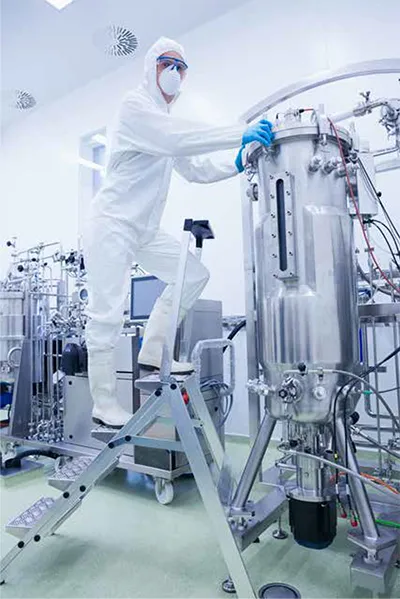
As the global demand for biologics continues to surge, the Asia-Pacific (APAC) region is rapidly emerging as a critical hub for biopharmaceutical manufacturing. Countries like India, Singapore, and South Korea are not only expanding their production capacities but also investing in advanced technologies to meet the growing need for accessible, affordable, and high-quality therapeutics. Among the many innovations shaping this transformation, next-generation resin technologies are playing a pivotal—though often underappreciated—role in optimising downstream processing and enabling scalable, sustainable production of monoclonal antibodies (mAbs) and other biologics.
A region on the rise
The APAC region’s ascent in biologics manufacturing is driven by two major forces: the rise of biosimilars and the region’s growing strength in contract development and manufacturing organisations (CDMOs and CMOs). Companies such as Celltrion, Samsung Bioepis, and Biocon have already made significant inroads into global markets, with biosimilars approved in the United States and Europe. Indian manufacturers, too, are exporting biologics to emerging markets, capitalising on the upcoming 2030 patent cliff that will open the door for a new wave of biosimilar products.
At the same time, geopolitical shifts and fast-changing regulatory trends are prompting pharmaceutical companies to diversify their supply chains. This has led to increased investment in APAC’s CDMO and CMO sectors, positioning the region as a strategic partner in global biomanufacturing. However, this opportunity comes with challenges. With tighter drug pricing regulations, the need for affordability is intensifying. To remain competitive, APAC manufacturers must modernize their production platforms— focusing on automation, digitalization, and, critically, innovations in downstream processing.
In addition, while multispecific and novel antibodies are growing faster globally, we see regular mAbs continue to be very common in APAC region with its biosimilars. These regular mAbs play a critical role in the manufacturing pipeline.
The downstream bottleneck
Downstream processing, particularly the purification of monoclonal antibodies, remains one of the most complex and resource-intensive stages of biologics manufacturing. Every step in the purification process—from capture to polishing—requires precise control and the right choice of technologies. Two areas, in particular, present persistent challenges: buffer management and resin utilisation.
Buffer preparation and storage consume significant space, time, and resources. mAb processes require large volumes of buffers, which can strain facility capacity and increase operational costs. Technologies such as inline conditioning and inline concentrators are helping to address this issue by reducing buffer volume requirements and streamlining buffer preparation workflows. Buffer usage can be further reduced by reducing column volumes when using more high capacity resins for downstream purification.
Resin selection and utilization are equally critical. The type of resin used, the process mode (fed-batch, continuous, or rapid cycling chromatography), resin performance and the number of purification steps all influence productivity, cost, and overall product quality. In clinical manufacturing, where production runs are limited, resins often do not reach their full cycle potential, leading to underutilization and increased cost per-gram.
In regular (commercial) manufacturing, the ability of resins to withstand harsh cleaning protocols directly impacts their lifespan and the risk of bioburden. Clinical production typically contributes to about one fifth of the total batch cost and the risk for molecule clinical failure is significantly higher. Whereas in commercial production where the drug is regulatory approved and resin utilization is higher the cost is only about 3% of the total batch cost.
Resin selection challenges in diverse APAC manufacturing pipelines
In the APAC region, resin selection is particularly complex due to the need to support a wide range of products across biosimilar and CDMO/CMO manufacturing pipelines. Manufacturers often encounter varying titers in cell culture feeds, which demand different resin characteristics. High-titer feeds require resins with high dynamic binding capacity (DBC), while low-titer feeds benefit from resins that enable faster processing and shorter retention times.
Resin lifecycle dynamics also vary depending on the stage of production. During preclinical and clinical manufacturing, fewer than 20 purification cycles may be run, limiting the economic efficiency of resin use. Cleaning protocols must be robust enough to prevent contamination while maintaining resin integrity. Additionally, process design must strike a balance between the number of purification steps and the need to achieve high purity and yield. The polishing step, in particular, presents challenges in removing antibody variants and other impurities that can impact the safety and efficacy of the final product.
The resin revolution
To overcome these hurdles, manufacturers are increasingly turning to next-generation resin technologies that offer higher capacity, greater selectivity, and improved durability. High-capacity resins are designed to bind regular mAbs but can also be used for new mAb variant molecules depending on purification problem or platform approach the customer has. These resins offer excellent DBC, enabling manufacturers to process larger mAb quantities with smaller resin volumes. Their high flow rates support faster processing, while their selectivity reduces the number of purification steps required, thereby improving overall process efficiency.
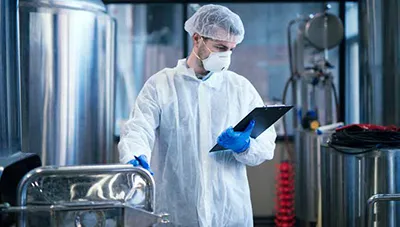
Protein A resins, long considered the gold standard for antibody capture, have evolved significantly in recent decades. Since their early development in the 1980s, these materials have been the subject of continued innovation to meet the growing and changing needs of bioprocessing. Modern resins are designed for efficiency and resilience, enabling their use across different processing strategies, including fed-batch, continuous operations, and rapid cycling. With an expanded range of ligands, they can better accommodate the structural diversity found in today’s monoclonal antibodies.
With the rise of biosimilars and low-utilization monoclonal antibodies, the demand for more flexible and cost-effective purification solutions is growing. We observe that resin technologies are evolving to meet these needs by offering high binding capacity while remaining accessible, allowing manufacturers to select options tailored to their development stage, whether prioritizing cost-efficiency, performance, or processing speed. This is especially key for clinical and early-stage production where only limited batches are required, compared to commercial manufacturing which often emphasizes speed and scalability. Operational efficiency is further supported by pre-packed, ready-to-use columns, which help minimize set-up time and ensure consistent performance, regardless of the size of the manufacturing output.
New resin technologies allow possibilities for manufacturers to combine these innovations with existing polishing methods such as ion exchange resins and multimodal resins. These polishing steps are often used to remove impurities such as aggregates, viruses, host cell proteins (HCPs), endotoxins, and charge variants, which are critical for achieving the high purity levels required for regulatory approval.
Next-generation resins are also designed with sustainability in mind. Many are now formulated with renewable materials like agarose, which help reduce environmental impact during manufacturing and across the product lifecycle. By balancing cost-effectiveness, performance, and environmental responsibility, these resins support more sustainable and adaptable approaches to bioprocessing.
Local Impact: APAC’s Growing Focus on Bioprocessing Innovation
Manufacturers in the APAC region are increasingly recognizing the importance of advanced bioprocessing technologies to meet both regional and global market demands. They are focusing on efficient, scalable, and regulatory-compliant purification solutions.
India is experiencing significant growth, driven by the rapid expansion of its biosimilar and contract manufacturing sectors. Companies are adopting next-generation resin platforms to enhance downstream processing, reduce costs, and facilitate entry into global markets. Their success in launching biosimilars in regulated markets like the U.S. and Europe reflects their technical maturity and sophisticated approaches to purification and process optimisation.
Biomanufacturers across the region prioritize scalable, cross-platform solutions that adapt to diverse therapeutic areas and evolving regulatory requirements. As the APAC bioprocessing landscape evolves into a manufacturing and research hub, there is a growing commitment to innovation beyond India.
Countries such as Singapore, South Korea, and Japan continue to drive collaborative innovation, emphasising advanced resin technologies and integrated bioprocessing solutions to strengthen their positions in the global biopharma market, particularly in personalised medicine and therapeutic modalities.
Strategic differentiation through resin innovation
As APAC CDMOs and pharmaceutical firms seek to compete on the global stage, resin innovation is emerging as a strategic differentiator. The concept of total process economy—optimising every aspect of the manufacturing process to reduce cost and improve efficiency—places resin selection at the center of strategic decision-making.
The availability of diverse solutions allows manufacturers to tailor resin selection based on molecule type, titer levels, process scale, and speed requirements. This flexibility drives productivity, reduces cost per gram, and enhances global competitiveness.
When upgrading their purification platforms, manufacturers must prioritize several key factors. First, they need to choose the right process models—whether fed-batch, PCC (Periodic Countercurrent Chromatography), or RCC (Rapid Cycling Chromatography)—and ensure that the associated technologies and resins are scalable and cost-effective. Second, they must partner with suppliers that offer robust quality systems, supply continuity, and regulatory support. This includes access to comprehensive documentation, change control notifications, and regulatory support files. Finally, manufacturers should select resins with established track records, long shelf life, and minimal lot-to-lot variation to ensure consistent performance and regulatory compliance.
More than a technical upgrade
Resin innovation is not merely a technical upgrade—it is a strategic enabler that can transform a manufacturer’s competitive position. Downstream processing is about more than just capturing antibodies; it’s about doing so with the highest possible purity, speed, and cost-efficiency. As therapeutic modalities diversify and titers improve, the demand for resins that offer selectivity to more binding domains, faster processing, and longer lifespans will only grow.
The transformation of the mAb market—with the rise of biosimilars, CDMOs, and novel therapies—requires a shift away from one-size-fits-all solutions. Manufacturers must adopt a tailored, strategic approach to resin selection and process design. Process economy is about more than resin cost; it’s about creating a differentiated, scalable, and robust manufacturing platform.
The road ahead: Partnerships and innovation
Sustaining APAC market’s momentum in biologics manufacturing will require more than just technology. It will demand collaborative innovation between global suppliers, local manufacturers, and governments. Talent development is a critical piece of this puzzle. Leading life sciences companies are partnering with governments to establish bioprocessing training and education centers, ensuring a steady pipeline of skilled professionals.
In the end, the future of biologics in APAC will be shaped by those who invest not just in tools—but in people, partnerships, and purpose-driven innovation. Next-generation resins are not just improving processes—they are powering a new era of biomanufacturing excellence across the region.