In July 2025, the FDA published 200 Complete Response letters (CRLs), offering significant transparency to the causes of regulatory delays. For decades CMC has been an overlooked strategic partner in drug development, but since the publications of the CRLs, CMC has been highlighted as the rate-limiting factor in achieving regulatory approvals. For the Asian pharma sector, eyeing the global markets, these are invaluable insights. With biologic patent cliff approaching the success will depend not only on scientific innovation but also on robust, early CMC planning.
FDA Transparency and CMC as Bottleneck
Nearly 70 per cited incomplete or inadequate CMC submissions based on the 2022-2024 review of publicly available FDA CRLs. This should not come as a surprise as it includes the same gaps which have been observed for many years:
● Insufficient process validation or lack of control strategies
● Inadequate analytical method validations at commercial manufacturing sites
● Inadequate tech transfer execution and facility/site readiness
● Missing comparability data between clinical and commercial batches
Although clinical science breakthroughs especially in cell and gene therapies are progressing due to accelerated regulatory pathways, product approvals are being delayed due to:
● Less mature upstream manufacturing including an inability to rapidly move from Phase I appropriate controls to Phase III appropriate controls
● Minimal analytical readiness
● Failure to provide process comparability across production scales and clinical phases
● Lacking oversight in tech transfer to CDMOs and GMP documentation
Due to rapid advancements in clinical science, there is increased urgency to initiate clinical trials, demanding fastest delivery of clinical trial material (CTM). Unfortunately, this results in minimal batch data including process reproducibility, inadequate analytical development and sometimes missing stability studies for the product. As accelerated regulatory pathways become more frequent, the burden on manufacturing readiness shifts to early clinical stages. The industry can no longer wait for the successful outcomes of clinical data to initiate phase appropriate CMC development work, instead it should be included in the overall development strategy. Phase appropriate process and assay development work should be executed in parallel with Phase I/II clinical phases, with cross-functional coordination between development, regulatory, quality and manufacturing teams. Especially for Asian companies partnering with global CDMOs, the CMC process and analytical comparability along with analytical method validation should be initiated well before any pivotal clinical trial. With FDAs publishing of the CRLs (hopefully the process of sharing will continue) the global pharma industry can understand the recurring CMC pitfalls and align with internal/external stakeholders. This will also expedite alignment with global regulatory expectations especially between ICH regions, fulfilling high quality data package requirements for IND, NDA, and biosimilar submissions.
Takeaways for Asian biotech
These lessons are particularly important for Asian biotech, where rapid growth brings both opportunity and risks.
In recent years countries like China, India, Singapore and South Korea have accelerated product development. Backed by local government, and the academic-industry partnerships are enabling them to provide cost efficient products but also faster scaleup especially of key materials and drug substances. The Asian investors, sponsors and regulators can leverage the FDA’s published CRLs to map out risk trends across various modalities, product types and manufacturing locations. As CMC failures are not always due to technical challenges but also due to
● Communication gaps between development and CMC teams
● Justifying commercial process with limited CMC data as relying on clinical data
● Mismanagement of the outsourced CDMO activities
Many Asian biotech companies rely on global CDMOs as they not only offer integrated CMC packages. Since the CDMOs do provide global clients with scalability, compliance and transparency to meet FDA, EMA and PMDA expectations they should also clearly align with sponsors on the comparability protocols and site readiness along with overall CMC strategy. This is particularly important as the Asian industry is gearing up for biosimilars due to the approaching patent cliff for many biologic products. Based on the CRLs shared for biologics, the issues are manageable such as with better process/analytical data planning and facility site readiness.
Technology as an Enabler
In addition, the pharma industry can leverage AI and Blockchain to help strengthen CMC resilience. Tools such as
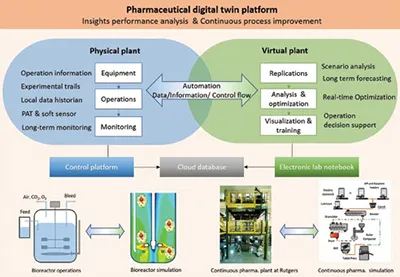
● AI-enabled digital twins can help detect parameter drift in process and simulate scale-up behavior thereby establishing robust and reproducible processes. It can also help improve the process comparability during tech transfers to CDMOs.
● Blockchain can reinforce cGMP compliance and traceability by creating audit ready records for raw materials and batch releases.
These technologies are being explored and implemented to enable regulatory trust and global competitiveness.
Tariff barriers and strategic shifts
The global pharmaceutical supply chain has been significantly impacted by shifting trade policies and tariff structures — particularly between the U.S., China, and emerging Asian economies. The recent US tariffs on pharmaceutical excipients and intermediates will not only increase operational costs but will also require realignment of outsourcing strategies as sponsors will seek “tariff smart” strategies.
The CMC readiness is indirectly impacted due to tariff burden as companies will require additional documentation, re-directed supply routes and slower customs clearance. Unfortunately, these delays can become deal-breakers for products facing tight launch timelines or those under accelerated pathways (like Breakthrough or Fast track). Hence Asian CDMOs (such as those in India, Singapore, South Korea, and Malaysia) must continue to maintain the financial and operational agility amid geopolitical uncertainty.
As regulatory authorities continue their push toward transparency and quality-driven decision-making, the burden is on the industry to make earlier, strategic decisions about geographic sourcing, including tariff-aware CDMO engagement. This evolving landscape emphasizes that CMC readiness is no longer just a technical hurdle — it's also a geopolitical and economic strategy that needs to be addressed and planned early.
Conclusion
The Pharma/Biotech industry can no longer treat CMC as a regulatory checkbox, but as a strategic enabler of speed, innovation, and global access. Asian biotech, especially those gearing up for approval and launch of biosimilars, need to act early, plan comprehensively and engage proactively with regulators. Done right, CMC shifts from bottleneck to breakthrough. Most importantly this effort benefits patients. Faster biosimilar approvals mean earlier access to safe, compliant and affordable life-saving therapies.
References
1) https://www.fda.gov/news-events/press-announcements/fda-embraces-radical-transparency-publishing-complete-response-letters
2) https://purplebooksearch.fda.gov/patent-list
3) https://www.mdpi.com/2227-9717/8/9/1088
4) https://www.pharmanow.live/pharma-manufacturing/blockchain-technology-pharma-supply-chains
--PFA Issue 61http://www.pharmafocusasia.com/e-book--