The pharmaceutical industry is undergoing a significant transformation by adapting machine learning (ML) and artificial intelligence (AI) technologies. This integration is poised to revolutionise various aspects of pharmaceutical manufacturing, from drug discovery to supply chain optimisation and regulatory compliance. ML and AI offer unprecedented opportunities to enhance operational efficiency and quality in pharmaceutical manufacturing. By analysing vast datasets and identifying patterns, these technologies accelerate response times, predict deviations, and aid in assuring process controls. ML and AI algorithms support product quality, which is paramount in the pharmaceutical industry. As the industry embraces AI technologies, collaborative efforts, knowledge-sharing, and industry-wide standards are vital for driving innovation and propelling the industry toward a more efficient and competitive future. AI has become indispensable in the evolving landscape of pharmaceutical manufacturing.
Process Parameter & Quality Attributes Monitoring
Continued process verification (CPV) represents the third Stage in the pharmaceutical process validation life cycle. CPV's primary goal is to identify process variability, pinpoint areas for enhanced performance, decrease variability, and refine process controls. The implementation of CPV is a regulatory expectation and can provide benefits beyond compliance by improving production processes and ensuring the reliability of drug quality and supply. AI is being progressively utilised for the acquisition, storage, and surveillance of extensive manufacturing datasets, aiming to decipher process variability and its underlying causes. AI demonstrates the capacity to expedite response times to signals, propose actionable steps, and streamline data presentation by highlighting pivotal factors that reveal the intrinsic correlation between outcomes and data. Additionally, AI enhances the precision of predicting deviations through advanced machine learning algorithms, conducts comprehensive root cause analyses, and upholds data integrity and compliance in predictions and root cause analyses. Nevertheless, successful implementation necessitates a strategic approach encompassing algorithm qualification and adherence to regulatory mandates. Compliance with regulatory standards is a critical aspect of pharmaceutical manufacturing. ML and AI solutions facilitate adherence to stringent regulations by automating documentation, monitoring processes, and identifying compliance risks. These technologies enable proactive risk management, reducing the likelihood of regulatory violations and associated penalties.
In accordance with the US FDA, AI models, specifically those employing machine learning, can be effectively utilised to expedite the identification of optimal processing parameters or facilitate the scaling-up of processes. This application aims to streamline development timelines and minimise resource wastage. Advanced process control (APC) can serve as a mechanism for dynamically regulating the manufacturing process to achieve desired outcomes. AI methods can play a pivotal role in the development of process controls capable of predicting the progression of a manufacturing process. This is achieved by integrating AI with real-time sensor data, allowing for proactive adjustments. The integration of AI in monitoring equipment enables the early detection of deviations from normal performance, triggering timely maintenance activities and reducing process downtime. AI methods can also prove valuable in monitoring product quality, encompassing packaging quality. Vision-based quality control, utilising AI-driven software to analyse images of packaging, labels, or glass vials, can efficiently identify deviations from the specified attributes. AI can extend its utility to scrutinising consumer complaints and deviation reports, processing large volumes of textual data to identify patterns and cluster problem areas. These approaches aid in prioritising areas for continual improvement, contributing to a more comprehensive root cause identification process.
Supply Chain Resilience
Efficient supply chain management is essential for ensuring the timely availability of raw materials, components, and finished products. ML and AI enable predictive demand forecasting, inventory optimisation, and dynamic routing, leading to streamlined supply chain operations, reduced inventory costs, and improved responsiveness to market demand fluctuations. Identifying emerging market trends and customer preferences is vital for strategic decisionmaking in pharmaceutical manufacturing. ML and AI algorithms analyse market data, social media trends, and consumer behaviour patterns to identify new market opportunities, optimise product portfolios, and tailor marketing strategies to specific customer segments. ML and AI technologies play a crucial role in optimising engineering processes, such as formulation design, process development, and equipment optimisation. Through leveraging advanced modelling techniques and simulation tools, these technologies accelerate product development cycles, reduce experimentation costs, and facilitate the design of robust manufacturing processes. The AI-based USP Medicine Supply Map represents another advancement. By scrutinising an extensive dataset comprising over 250 million data points and insights from 40+ external sources, including FDA and non-US regulatory agencies, alongside USP's own proprietary data from more than 22,000 locations worldwide, the Medicine Supply Map provides a platform that enables the continuous evaluation of potential disruptions in the medicine supply chain. Such real-time insights can empower governments, regulatory bodies, manufacturers, and healthcare institutions to make informed decisions to enhance supply chain resilience.
Organisational Transformation
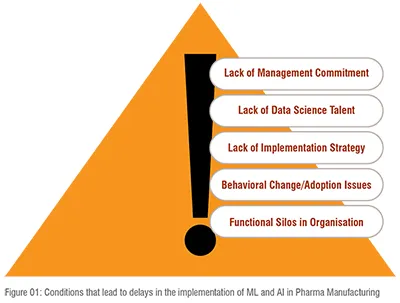
The successful implementation of ML and AI in pharmaceutical manufacturing requires skilled professionals with expertise in data science, computer programming, and domain-specific knowledge. However, there is a shortage of qualified talent in the field, making talent acquisition a significant challenge for pharmaceutical companies. The rapid evolution of ML and AI technologies necessitates ongoing investment in talent development and education initiatives within the pharmaceutical industry. Strategic talent acquisition efforts, professional development programs, and collaborations with academic institutions are essential for cultivating a skilled workforce equipped to harness the full potential of these technologies. Additionally, specialised ML and AI educational initiatives tailored to the intricacies of pharmaceutical manufacturing can accelerate the adoption and integration of these technologies across the industry. Silos within organisations can impede the effective integration of ML and AI technologies across departments and functions. Overcoming organisational barriers requires strong leadership, cross-functional collaboration, and a shared vision for leveraging technology to drive innovation and competitiveness. Senior management buy-in is essential for the successful adoption of ML and AI in pharmaceutical manufacturing. Executives must demonstrate a commitment to investing in technology infrastructure, talent development, and change management initiatives to realise the full potential of these technologies. Resistance to change is natural in any organisation undergoing technological transformation. Employees may be apprehensive about adopting new tools and methodologies, fearing job displacement or increased workload. Effective change management strategies, training programs, and communication efforts are essential to address these concerns and foster a culture of innovation and continuous improvement. (Figure: 01)
While ML and AI offer numerous benefits in pharmaceutical manufacturing, human oversight remains essential to ensure compliance with regulatory standards and patient safety. Regulatory agencies require the presence of trained professionals who can interpret and validate the outputs of ML and AI systems, mitigating the risks associated with algorithmic biases and errors. Therefore, organisations must strike a balance between automation and human intervention to maintain the highest standards of product quality and regulatory compliance. As the adoption of these technologies proliferates, pharmaceutical companies will increasingly rely on data-driven decision-making, automation, and predictive analytics to drive regulatory compliance, efficiency and remain competitive in a rapidly evolving landscape. Furthermore, collaborative initiatives, knowledge-sharing platforms, and industry-wide standards for data interoperability will further facilitate innovation and accelerate technological adoption across the pharmaceutical ecosystem.
Conclusion
The future of pharmaceutical manufacturing is intricately linked to the continued advancements in ML and AI technologies. With the continuous advancements in technology and the evolving landscape of the pharmaceutical industry, the integration of ML and AI is not merely an option but a necessity for organisations aiming to remain at the forefront of innovation and competitive advantage. Stakeholders must commit to ongoing investment to harness the full potential of these technologies and drive meaningful change across all facets of pharmaceutical manufacturing. In addition to enhancing operational efficiency and driving cost savings, ML and AI have the potential to revolutionise the way pharmaceutical companies interact with their customers. Using advanced analytics and predictive modelling techniques, organisations can gain deeper insights into patient behaviour and preferences, enabling targeted advancements in personalised healthcare. By means of embracing these technologies, fostering a culture of continuous improvement, and working together, the industry can harness the transformative power of these technologies to propel pharmaceutical manufacturing into a brighter and more thriving future.