The AI Renaissance in Oncology
The landscape of drug discovery is undergoing a profound transformation, moving from serendipitous observations and laborious empirical screening to a new era defined by algorithmic precision. Given the complexity of tumor heterogeneity, acquired resistance mechanisms, and complex tumor microenvironments, oncology is a field where this paradigm shift is especially important. The pharmaceutical industry has struggled for decades with "Eroom's Law," which states that despite technological advancements, drug discovery is getting slower and more costly. The combination of machine learning (ML) and artificial intelligence (AI), however, is now providing a powerful counterbalance to this tendency.
In translational medicine, artificial intelligence (AI) is becoming more than just a tool for speeding up discovery; it is also a crucial link between reliable biological validation and computational predictions. These algorithms' capacity to process and synthesize enormous amounts of data, far more than any one researcher could possibly comprehend, is opening up new avenues for understanding the molecular causes of cancer. The path from AI-driven insights to their biological validation is examined in this article, emphasizing the crucial phases and factors involved in providing patients with innovative oncology treatments.
AI in Target Identification
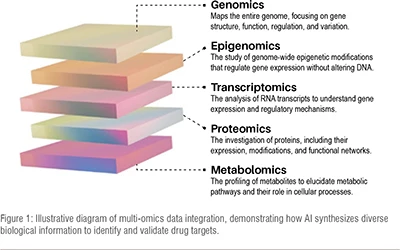
AI can meticulously combine large multi-omics datasets, such as proteomics, metabolomics, transcriptomics, and genomics, to find new, disease-causing vulnerabilities. This goes beyond structural predictions. Researchers can now find previously "undruggable" targets, like transcription factors or protein-protein interactions, that have long eluded conventional drug discovery efforts thanks to this integrated approach. AI systems can identify important molecular actors that propel the development of cancer by sorting through intricate biological networks and locating "hub" proteins that are necessary for tumor survival. This gives drug development a logical, data-driven foundation and greatly lowers the possibility of pursuing targets that are not clinically relevant.
AI is also being used to find biomarkers that can forecast how a patient will react to particular treatments. Machine learning models can detect patterns of protein expression or genetic signatures that are associated with treatment effectiveness by analysing data from clinical trials and empirical evidence. The development of companion diagnostics that guarantee the appropriate medication is given to the appropriate patient at the appropriate time is made possible by this fundamental aspect of precision oncology. One significant benefit is the ability to find these biomarkers early in the discovery process, which expedites clinical development and raises the possibility of regulatory approval. (Figure: 01)
From Virtual Screens to Lead Molecules
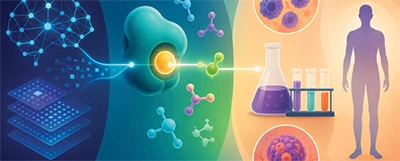
In molecular design, generative AI takes center stage after possible targets have been found. These advanced algorithms can create de novo molecules with optimal pharmacokinetic and pharmacodynamics characteristics; they are frequently based on variational autoencoders (VAEs) or generative adversarial networks (GANs). This involves minimising off-target effects that could result in toxicity as well as fine-tuning characteristics like solubility, metabolic stability, and membrane permeability. The hit-to-lead process is greatly accelerated by this capability, which reduces timelines from years to just months. (Figure: 02)
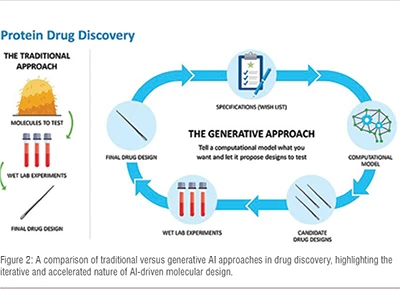
The creation of complex biologics, including monoclonal antibodies and antibody-drug conjugates (ADCs), is another application of AI in molecular design. In addition to designing linkers for ADCs that are stable in circulation but release their toxic payload only within the tumor microenvironment, AI algorithms can optimise the binding affinity and specificity of antibodies. This degree of accuracy is challenging to attain using conventional techniques and marks a major advancement in the creation of targeted cancer treatments. The speed and efficiency of drug development are being redefined by these AI-designed molecules as they progress through the pipeline.
The Critical Bridge: Biological Validation in Translational Oncology
Despite the remarkable capabilities of AI in discovery and design, biological validation remains the indispensable 'reality check'. Computational predictions, no matter how sophisticated, are based on models of reality, and these models are inherently limited by the data used to train them. Therefore, rigorous wet-lab confirmation is essential to ensure that AI-discovered targets and molecules are relevant and effective in living systems. This is where translational oncology plays a pivotal role, providing the experimental framework to bridge the gap between the digital and biological worlds.
Translational oncology leverages a suite of advanced experimental models for this purpose. High-throughput screening platforms allow for the rapid testing of AI-designed molecules against relevant biological targets in a laboratory setting. However, simple cell culture models often fail to capture the complexity of human tumors. To address this, researchers are increasingly using advanced in vitro models, such as organ-on-a-chip systems and three-dimensional (3D) cell cultures. These systems provide a more physiologically relevant environment, incorporating multiple cell types and mimicking the physical forces and biochemical gradients found within the tumor microenvironment. (Figure: 03)
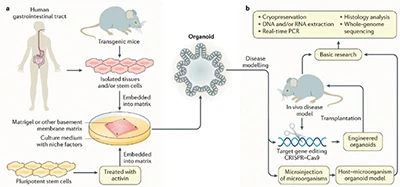
Figure 3: Various organoid models used in cancer research, illustrating their utility in recapitulating tumor biology and facilitating drug validation.
Furthermore, patient-derived xenografts (PDX) and organoids serve as crucial translational bridges. PDX models involve transplanting human tumor tissue into immune-compromised mice, allowing researchers to study the tumor’s growth and response to therapy in a complex living organism. Organoids, on the other hand, are 3D structures grown from patient-derived stem cells or tumor cells that recapitulate the architecture and function of the original organ or tumor. These models offer a high degree of clinical relevance, as they maintain the genetic and phenotypic characteristics of the patient's tumor. By validating AI-discovered targets and molecules in these models, researchers can gain greater confidence in their potential for clinical success.
One such domain where AI can be utilised to accelerate drug development is the Immune-oncology domain. Therapies such as T-cell engagers and bispecific antibodies must not only bind their targets but also orchestrate precise immune activation. Small deviations in affinity or receptor density can dramatically alter therapeutic window and toxicity. Validating AI-designed immune modulators requires multi-parametric analysis. Investigators must assess target density, receptor clustering, cytokine release profiles and cytotoxic activity in co-culture systems. One way to determine whether a target is sufficiently expressed to support therapeutic engagement without causing excessive off-target toxicity is to quantify the number of receptor copies in tumor tissue sections. Researchers can ascertain whether computationally optimised molecules result in effective anti-tumor responses by monitoring immune cell infiltration, tumor killing, and cytokine signatures in real-time in human-relevant models such as organoid systems. Here, experimental oncology becomes the judge of biological truth, and AI becomes a generator of hypotheses.
Overcoming the 'Black Box': Explainability and Regulatory Hurdles
The decision-making processes of many sophisticated AI models, especially deep neural networks, are frequently opaque and extremely complex. Because researchers and clinicians must comprehend the biological basis of a prediction in order to trust it, this lack of transparency may be a major obstacle to adoption. Therefore, establishing trust and guaranteeing that AI-driven insights are actionable depend heavily on explainable AI (XAI). By emphasizing the salient characteristics or biological processes that are responsible for the outcome, XAI seeks to offer transparent insights into how AI models generate their predictions.
The difficulties presented by AI in drug development are also being faced by regulatory agencies like the FDA and EMA. The iterative, data-driven nature of AI-driven discovery necessitates a new regulatory framework because these agencies are used to assessing clearly defined, linear processes. The reproducibility of AI models, the possibility of bias in training data, and the possibility of "hallucinations", in which an AI model makes a prediction that is biologically implausible, are all issues. Regulatory organisations are working to address these issues by creating guidelines for the application of AI in drug development that place a strong emphasis on the necessity of thorough validation, openness, and continuous observation of AI models.
Technology developers, pharmaceutical companies, and regulatory agencies will need to work together to overcome these regulatory obstacles. In addition to creating new techniques for auditing and monitoring AI systems, this entails setting standards for data quality and model validation. We can anticipate more uniform and transparent regulatory frameworks for AI-driven treatments as the field develops, which will be crucial for delivering these advancements to patients. The objective is to establish a regulatory framework that promotes creativity while guaranteeing the security and effectiveness of novel therapies.
Future Perspectives: The Integrated Ecosystem
The smooth integration of AI with other state-of-the-art technologies is key to the future of oncology drug discovery. We are heading toward an integrated ecosystem where robotics, artificial intelligence, and synthetic biology collaborate to speed up the whole drug development process. For instance, automated "closed-loop" labs are being created in which robotic systems carry out experiments created by AI algorithms. These experiments' outcomes are then fed back into the AI model, which utilises the information to create the subsequent experiments. The speed and effectiveness of drug discovery and validation could be significantly increased with this highly automated method.
Additionally, this integrated approach will open the door to oncology that is truly personalized. Future developments could include real-time target validation for specific patients, in which AI models analyse each patient's distinct tumor profile to determine the best course of action. This might entail the use of "digital twins," which are computer models of a patient's tumor that can be used to mimic the effects of various medications. We can get closer to providing genuinely individualised cancer care by fusing AI-driven predictions with quick biological validation in patient-derived models.
The next generation of cancer treatments will ultimately be determined by the interaction between silicon and carbon, between sophisticated algorithms and biological systems. Biological validation offers the crucial foundation in reality, while AI offers the computational capacity to negotiate the enormous complexity of cancer biology. By embracing both, we can open up new avenues for cancer treatment and even cure, giving patients all over the world previously unheard-of hope. The potential impact is enormous, and the journey from algorithms to biology is just getting started.
Notable AI-Discovered Oncology Candidates in Clinical Trials
Several AI-discovered molecules are currently undergoing clinical evaluation, demonstrating the tangible impact of this technology. These include novel small molecules and biologics targeting various cancer types, showcasing the breadth of AI's application in oncology. For instance, Insilico Medicine's ISM001- 055, an AI-discovered small molecule for idiopathic pulmonary fibrosis, has paved the way for similar efforts in oncology, with several candidates now in Phase I and II trials for solid tumors and hematological malignancies.
References
[1] Shahin, M. H. (2025). Artificial Intelligence in Clinical and Translational Science. PMC.
[2] Jayatunga, M. K. P. (2024). How successful are AI-discovered drugs in clinical trials? A...ScienceDirect.
[3] You, Y. (2022). Artificial intelligence in cancer target identification and drug discovery.Nature.
[4] Crown Bioscience. (2025). In Silico Models in Oncology: Validating AI-Driven Predictive...Blog.
[5] Fang, C. (2025). Artificial intelligence in oncology drug development and...Frontiers in Oncology.
[6] Wenteler, A. (2024). AI approaches for the discovery and validation of drug targets.PMC.
[7] Nature. (2026). AI accelerate the identification of druggable targets by 3D structures...Nature.
[8] PMC. (2025). Artificial intelligence in oncology drug development and management.PMC.
[9] Sarvepalli, S. (2025). Role of artificial intelligence in cancer drug discovery and...ScienceDirect.
[10] ACCC. (2024). Harnessing Artificial Intelligence in Drug Discovery and Development.ACCC.
[11] Oncodaily. (2025). Artificial Intelligence in Cancer Drug Discovery in 2025.Oncodaily.
[12] Nature. (2026). The future of mathematical oncology in the age of AI.Nature.
[13] ESMO. (2025). How AI and computational tools are shaping future cancer strategy.ESMO Daily Reporter.
[14] PMC. (2025). AI-driven multi-omics integration in precision oncology.PMC.
[15] TD2inc. (2025). A Framework for Improving Clinical Translatability with AI, RECIST...Blog.
[16] Integrating Multi-Omics Data for Effective Target... (n.d.). Retrieved from https://www.creative-biolabs.net/integrating-multi-omics-data-for-effective-target-identification-and-validation-in-drug-discovery.htm
[17] The Revolution in Drug Discovery: How AI-Powered Protein... (n.d.). Retrieved from https://www.insilicomedicine.com/ai-powered-protein-folding-revolutionizing-drug-discovery/
[18] Organoid models of gastrointestinal cancers in basic and... (n.d.). Retrieved from https://www.nature.com/articles/s41575-022-00669-9