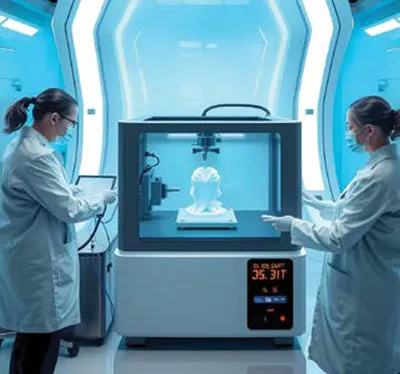
The pharmaceutical industry is undergoing a paradigm shift, driven by technological advancements. Among these, AI and 3D printing are emerging as transformative forces. Individually, these technologies have shown immense potential, but their convergence opens new frontiers for personalized medicine, optimized manufacturing, and improved patient outcomes. This article explores how AI-driven 3D printing is reshaping pharmaceutical manufacturing and paving the way for smarter, more efficient drug delivery systems.
Understanding the role of 3D printing in pharma
Also known as additive manufacturing, 3D printing involves the layer-by-layer construction of objects based on digital designs. In pharmaceuticals, this technology enables the fabrication of complex drug delivery systems, customized dosage forms, and innovative implants. Unlike traditional manufacturing methods, 3D printing offers flexibility in design, reduced material wastage, and precision tailoring of drug release profiles. Key applications of 3D printing in pharmaceuticals include:
• Personalised dosage Forms: Tailoring drug dosages for individual patients based on their needs.
• Polypills: Combining multiple drugs into a single pill with controlled release properties
• Innovative implants: Creating bioresorbable implants and prosthetics.
Despite its promise, challenges such as regulatory approval, scalability, and cost have limited widespread adoption. Here, AI emerges as a powerful enabler.
AI’s transformative role in 3D printing
AI enhances the capabilities of 3D printing by providing data-driven insights and automating critical processes. From optimising material selection to predicting the performance of printed products, AI is integral to advancing 3D printing in pharmaceuticals.
Key contributions of AI
1. Material optimisation: AI algorithms analyze vast datasets to identify ideal excipients, polymers, or active pharmaceutical ingredients (APIs) for 3D printing. For instance, machine learning models can predict how materials will behave during printing, ensuring stability and efficacy.
2. Design automation: AI tools generate optimized 3D models for complex drug delivery systems, reducing the time and effort required for design iterations.
3. Process control: AI-powered systems monitor and adjust printing parameters in real-time, ensuring consistent quality and minimising errors.
4. Predictive analytics: By simulating drug release profiles and stability under different conditions, AI accelerates the development of effective dosage forms.
Through these contributions, AI mitigates many challenges associated with 3D printing, making it more reliable, scalable, and cost-effective.
Applications of AI-Driven 3D printing in pharmaceuticals
The integration of AI and 3D printing has unlocked innovative applications, including:
1. Personalised medicine
AI analyses patient data such as genetic profiles, age, and medical history to create individualised drug regimens. These regimens are translated into 3D printed dosage forms tailored to specific therapeutic needs. For instance, 3D printed tablets can deliver precise dosages of multiple drugs in a single polypill, reducing pill burden and enhancing adherence.
2. Smart drug delivery systems
AI facilitates the design of complex delivery systems such as micro-needles and biodegradable implants. These systems ensure targeted drug release, minimising side effects and maximising therapeutic efficacy.
3. Rapid prototyping for clinicaltTrials
AI streamlines the production of prototypes for clinical trials, enabling faster iteration cycles. Researchers can rapidly test different formulations, saving time and resources during drug development.
4. Advanced bioprinting
In bioprinting, AI helps optimise cell placement and scaffold design for regenerative medicine applications. This includes the creation of tissue-engineered drug delivery systems and organ-on-a-chip models for testing drug efficacy.
Challenges and future directions
While the combination of AI and 3D printing offers unparalleled potential, several challenges remain:
1. Regulatory barriers: Ensuring compliance with stringent pharmaceutical regulations for AI-driven processes.
2. Data privacy: Protecting sensitive patient data used by AI algorithms for personalised medicine.
3. Skill gaps: Training personnel to operate and maintain AI-integrated 3D printing systems.
4. Cost constraints: Balancing the high initial investment with long-term benefits.
Looking ahead, advancements in AI algorithms and materials science will further enhance the capabilities of 3D printing. Collaborative efforts between academia, industry, and regulatory bodies are essential to address these challenges and accelerate adoption.
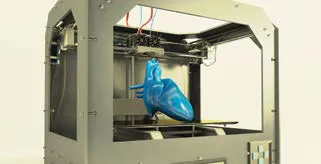
Empowering researchers with AIdriven 3D Printing
The combination of AI and 3D printing is proving to be a game-changer for researchers in drug development. By leveraging AI-driven modelling and simulation tools, researchers can explore innovative pharmaceutical designs, predict drug release kinetics, and assess the stability of formulations before physical trials.
• Virtual prototyping: AI enables the creation of virtual prototypes of 3D printed drug delivery systems, reducing the need for extensive trial-and-error experiments.
• Predictive Drug Formulations: Researchers can use AI algorithms to predict the behavior of new drug formulations during 3D printing, saving time and resources in the lab.
• Collaboration Platforms: AI-powered platforms facilitate seamless collaboration by enabling researchers to share data, designs, and experimental results globally, fostering innovation.
This integration empowers researchers to innovate faster, reduce costs, and bring cutting-edge therapies to market more efficiently. It also democratizes access to advanced technologies, enabling even small-scale labs to participate in transformative pharmaceutical innovation.
Conclusion
AI-driven 3D printing represents a significant leap forward in pharmaceutical manufacturing. By combining the precision of 3D printing with the intelligence of AI, the industry can achieve new levels of efficiency, customisation, and therapeutic efficacy. As these technologies continue to evolve, they hold the promise of transforming healthcare delivery and bringing us closer to the goal of personalized medicine for all.