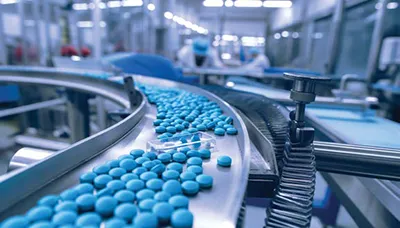
As global demand for biomanufacturing in pharmaceuticals, food, and industrial applications continues to rise, innovative solutions are essential to meet the increasing need for high-quality, cost-effective bioproducts. This growing demand is driven by the rapid advancements in biotechnology and the increasing global need for specialised biologic drugs, including vaccines, therapeutic proteins, and enzymes. In this context, continuous manufacturing (CM) plays a pivotal role by sending materials directly and immediately to the next step of the process, eliminating hold times and significantly reducing human interventions. This transformative approach offers numerous potential benefits, including improved product quality, reduced waste, lower costs, and enhanced manufacturing agility and sustainability. CM is revolutionising the production of proteins and other biologics by streamlining and optimising bioprocessing operations.
Enhancing efficiencies and reducing costs through continuous manufacturing
The implementation of continuous manufacturing (CM) is pivotal in meeting biomanufacturing’s sustainability goals, offering a more efficient and ecofriendly alternative to traditional batch manufacturing. Unlike batch processes, which waste significant resources during downtime and cleaning stages, CM operates continuously, minimising waste and optimising the use of raw materials. This shift reduces inefficiencies, resource waste, and operational costs, while enhancing product consistency, protein yield, and throughput. By maintaining stable, optimal conditions throughout the process, CM not only supports the development of greener manufacturing practices but also accelerates production, reduces variability, and ultimately lowers energy consumption, making it a key factor in the future of biomanufacturing.
Beyond enhanced productivity, CM also drives cost savings by minimising downtime, waste, energy utilisation, and manual intervention. CM’s compact, modular design reduces space requirements, while advanced monitoring and real-time data collection systems enable predictive maintenance, further reducing operational disruptions and costs. The reduced need for batch transitions and extensive cleaning results in both time and resource savings. The modularity of CM systems also allows manufacturers to scale operations up or down depending on demand, making it easier to respond to market fluctuations without the need for significant capital investment.
Moreover, advanced process analytical technologies (PAT) integrated into CM systems offer a more precise method of monitoring and controlling process variables in real-time. These tools allow manufacturers to maintain the desired quality of their product while minimising the chances of deviations or errors during production. As a result, there is greater process reliability and a reduction in the number of product batches that fail to meet the required quality standards, thus contributing to long-term cost savings.
Accelerating global accessibility and innovation in bioprocessing
A significant advantage of CM is its potential to simplify bioprocessing operations. CM processes typically operate in a steady state that requires less oversight and is more amenable to automation. Modern continuous fermentation systems, with their intuitive and modular designs, allow non-experts to manage complex processes with greater ease. Simplified interfaces, integrated controls, and automated functions make these systems more accessible, enabling users with limited experience to efficiently monitor and control production processes.
Automation within CM systems also facilitates tighter control over the production environment, helping operators achieve higher precision and reliability. The reduced need for manual intervention not only minimises human errors but also reduces the strain on operators, leading to better overall workplace safety and operational efficiency.
The integration of intuitive interfaces, automated functions, and remote monitoring capabilities means that operators, even with limited experience, can manage production processes effectively. This democratisation of biomanufacturing technology is critical for expanding access to life-saving treatments, as it empowers smaller players to produce biologics such as vaccines, proteins, and therapeutics without the need for large, specialised teams.
By simplifying bioprocessing operations and reducing the need for highly skilled personnel, CM facilitates faster scaling and quicker time-to-market for new products. This increased efficiency not only benefits emerging markets but also enables companies to bring new therapies to market faster, addressing critical healthcare needs more effectively. In some cases, CM even allows for localised production of biologics, reducing dependency on global supply chains and increasing the reliability of the availability of essential medicines in remote areas.
The global impact: democratising biomanufacturing for health equity
As CM technologies become more widely adopted, they hold the potential to transform the global bioprocessing landscape. One of the most powerful aspects of CM is its ability to lower the cost of production while maintaining high standards of quality and consistency. This makes high-quality biologics more accessible, not just to larger pharmaceutical companies, but also to smaller biotech firms and markets in need of affordable healthcare solutions.
This affordability and accessibility of CM technology opens opportunities for new entrants into the biomanufacturing space. Smaller pharmaceutical companies, biotech startups, and academic institutions can leverage CM systems to manufacture their products without the need for large-scale, traditional manufacturing setups. This not only lowers the barriers to entry in biotechnology but also encourages a more competitive and innovative environment that drives progress in drug development.
Moreover, the democratisation of bioprocessing through user-friendly CM systems empowers a broader range of users, including those in emerging markets and smaller biotech companies. This is particularly important in low- and middle-income countries, where the accessibility of technology can significantly impact healthcare outcomes. The ability to train operators and users more quickly and effectively on continuous manufacturing technologies can also lead to faster adoption in these regions, bridging the gap between developed and developing economies. Ensuring that manuals and instructions are clear and understandable is also crucial, as language and word choice can affect how users interpret and engage with the technology.
By engaging with individuals on their terms and taking their unique perspectives into account, biomanufacturing solution providers can design systems that are both more inclusive and highly effective. This approach includes designing equipment that is physically accessible to users based on their capabilities and limitations, and clearly communicating cost structures to avoid overwhelming potential users with complex financial information. The greater availability of low-cost, high-quality biologics in these regions can help address critical health challenges, such as infectious diseases, malnutrition, and access to life-saving medications.
The future of biomanufacturing: innovation and collaboration
Looking ahead, the future of biomanufacturing is poised for dramatic transformation as CM technologies evolve. The combination of operational efficiency, cost reduction, and enhanced accessibility makes CM a key driver of innovation in the biotech sector. Manufacturers will be able to scale production more easily, reduce the time it takes to bring products to the market, and respond more agilely to shifts in demand. The ability to produce biologics at a faster pace, with more consistent quality and at lower costs, will be essential in meeting future global health needs, especially considering the growing pressure to address emerging diseases, pandemics, and an aging population.
As CM becomes the standard, it will create a more collaborative, inclusive environment for biomanufacturers around the world. With easier access to cutting-edge technology and more flexible production systems, smaller companies and startups will be able to contribute to groundbreaking innovations in biotechnology, fostering growth and competition in the sector. Collaboration between industry leaders, governments, and academic institutions will also be crucial to the widespread adoption of CM technologies, as shared knowledge and resources can accelerate the development and application of these systems.
By improving production efficiency and reducing costs, CM has the potential to address critical challenges in global health. As the technology advances, it will make high-quality biologics more affordable, accessible, and faster to produce, ultimately revolutionising global healthcare delivery. The increased scalability and versatility of CM technologies will ensure that manufacturers can meet the diverse needs of global healthcare markets, from developing countries to the most advanced economies, paving the way for a healthier future for all.